Merchant Loyalty Solution Built Into Your Card Terminal
72% of UK consumers say they would return to a shop more often if it offered a loyalty programme, yet fewer than 15% of independent retailers run one.

Seventy-two percent of UK consumers say they would return to a shop more often if it offered a loyalty programme, yet fewer than 15% of independent retailers run one. The gap is not ambition. It is infrastructure. Most loyalty platforms assume merchants have dedicated POS systems, custom apps, or the budget for bespoke integrations. They don't. What every merchant does have is a card terminal sitting on the counter, processing payments every single day.
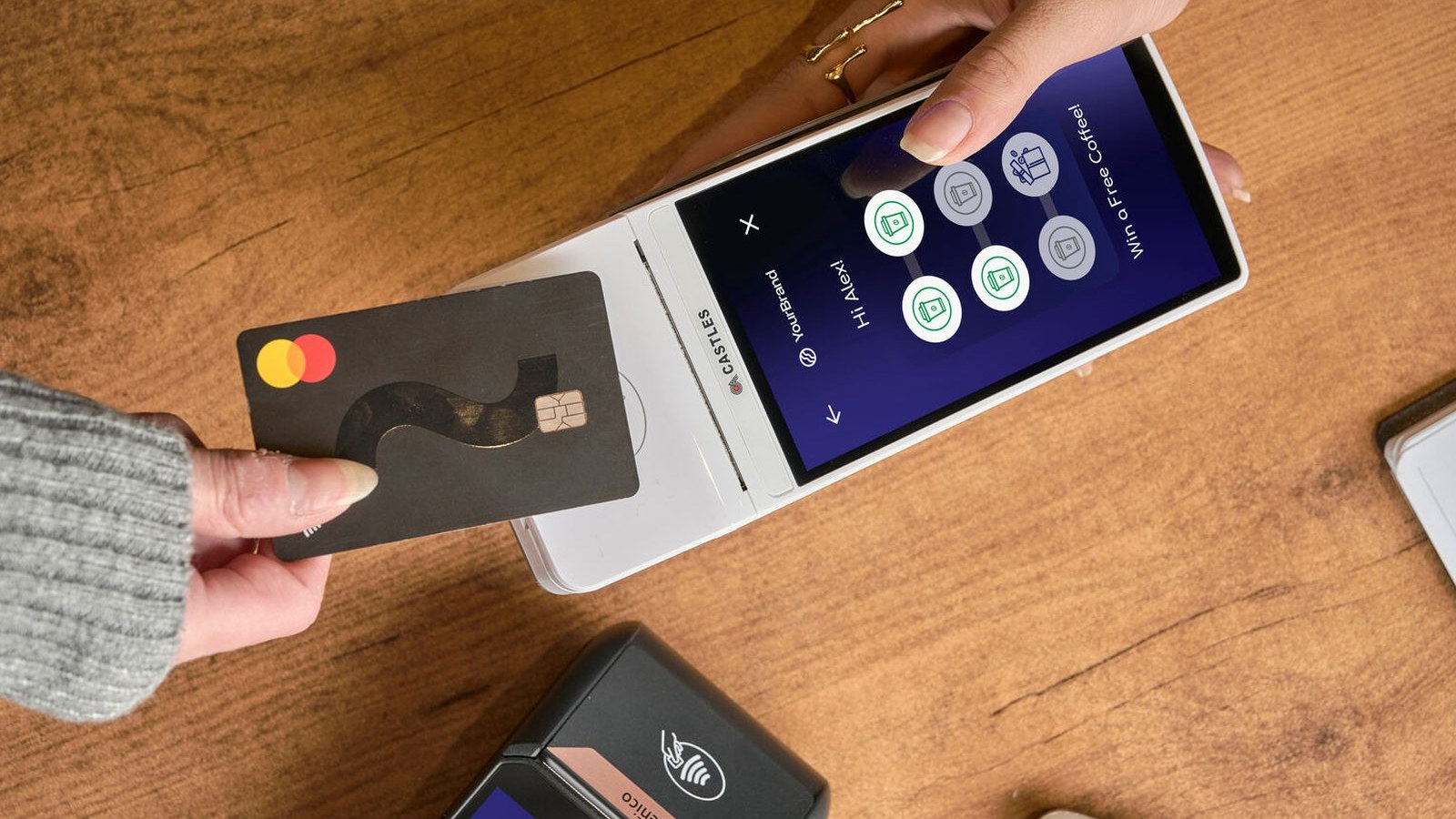
A merchant loyalty solution card terminal approach closes that gap by embedding loyalty directly into the hardware merchants already own. No second device. No app download for the customer. No plastic stamp card gathering dust in a wallet. Zeal installs proprietary software on standard payment terminals (PAX A920, Ingenico Move 5000, Castles S1F2, Verifone T650c) and turns each transaction into a loyalty touchpoint.
This page explains exactly how terminal-native loyalty works, who it serves, and why ISOs, acquirers, and PSPs are adding it to their portfolios as a differentiation and retention tool.
Why Terminal-Native Loyalty Beats Every Alternative for Independent Merchants
The average independent retailer in the UK processes between 80 and 300 card transactions per day. Each one is a data event (basket size, time of day, frequency) that vanishes the moment the receipt prints. A merchant loyalty solution embedded in the card terminal captures that data and converts it into actionable customer intelligence without adding a single step to the checkout.
Compare this to the alternatives. Standalone loyalty apps require customers to download software, create accounts, and remember to open the app at the point of sale. Research from the Payments Association UK shows that app-based loyalty programmes see activation rates below 20% for SME merchants, meaning four out of five customers never engage. Paper punch cards have zero data value. Integrated POS loyalty requires an ePOS system many independents simply do not have.
Terminal-native loyalty sidesteps all of these friction points. The customer pays with their card (contactless, chip, or mobile wallet) and the terminal's software recognises the card token automatically. No scanning. No check-in. No extra hardware. The loyalty programme runs silently beneath the payment, surfacing rewards on the terminal screen or via a digital receipt.
For hospitality operators (cafés, quick-service restaurants, pubs), this matters enormously. Staff turnover is high. Training time is short. Any loyalty system that requires manual intervention at the till will be abandoned within weeks. Terminal-native loyalty requires zero staff training because there is nothing new for staff to do.
How Zeal's Software Works on Standard Card Terminals
Zeal does not manufacture terminals. We wrote software that runs on them. This distinction matters because it means merchants, ISOs, and acquirers do not need to swap hardware or renegotiate terminal leases. The software is deployed remotely via TMS (Terminal Management System) push or side-loaded during a routine maintenance visit.
Once installed, Zeal's application sits alongside the payment kernel on Android-based smart terminals. It intercepts anonymised transaction metadata (amount, timestamp, card token hash) and maps it against the merchant's loyalty configuration. The merchant defines the rules: visit-based rewards, spend thresholds, time-limited promotions, or tiered programmes. Configuration takes under ten minutes through Zeal's merchant dashboard, accessible from any browser.
The technical architecture is deliberately lightweight. Zeal's SDK communicates with our cloud platform over the terminal's existing data connection (4G, Wi-Fi, or Ethernet). There is no additional PCI DSS scope introduced because we never touch full PAN data, only tokenised card identifiers that the terminal's EMV kernel has already processed. This is a critical point for acquirers evaluating compliance risk.
Terminal compatibility is broad. Zeal currently supports the following hardware families:
| Terminal | OS | Form Factor | Zeal Compatible | Deployment |
|---|---|---|---|---|
| PAX A920 | Android 5.1+ | Countertop / portable | Yes | TMS push |
| PAX A77 | Android 7.0+ | Countertop | Yes | TMS push |
| Ingenico Move 5000 | Telium TETRA | Portable | Yes | TMS push / side-load |
| Castles S1F2 | Android 10 | Countertop | Yes | TMS push |
| Verifone T650c | Android | Countertop | Yes | TMS push |
| Verifone V240m | Android | Portable | Yes | TMS push |
For ISOs managing thousands of terminals across a merchant portfolio, remote TMS deployment eliminates truck rolls. A single push can activate loyalty across an entire estate overnight. Learn more about how Zeal works with ISOs and acquirers on our ISO partnership page.
The Three Rs of Loyalty, Applied to Card Terminal Data
The classic loyalty framework (Recognition, Reward, Relevance) is often cited in marketing textbooks. But for independent merchants, these concepts only become useful when they are grounded in actual transaction data rather than guesswork.
Recognition starts with identifying returning customers. Zeal's software does this automatically via tokenised card data. When a customer taps their card for the third, tenth, or fiftieth time, the terminal knows. The merchant does not need to ask "Are you a member?" or scan a barcode. Recognition is passive and frictionless.
Reward is the value exchange. Zeal supports multiple reward mechanics: percentage discounts on the next visit, fixed-value vouchers triggered by spend thresholds, and bonus multipliers during off-peak hours. Merchants using time-based promotions (such as double points before 11am) have observed measurable shifts in visit distribution toward quieter trading periods. This is not a guaranteed outcome, but the data pattern is consistent across deployments.
Relevance is where terminal data becomes genuinely powerful. Because Zeal captures transaction frequency, average basket size, and visit cadence, merchants can segment customers without ever collecting personal information. A café owner can identify that 30% of their card-paying customers visit once a week but spend under £5, while 10% visit three times a week and spend over £8. Different segments warrant different offers. Zeal's dashboard surfaces these segments automatically.
The UK Finance Payments Markets Summary 2024 reports that contactless payments now account for over 60% of all in-store card transactions. This means the vast majority of repeat customers are already identifiable through their card token: no app required, no registration form, no friction.
What ISOs, Acquirers, and PSPs Gain from Terminal-Based Loyalty
Merchant attrition is the silent margin killer in payment processing. The Nilson Report consistently tracks ISO merchant churn rates in the 15–25% annual range across the industry. When a merchant leaves, the residual income from that account disappears permanently. Replacing it costs multiples of what retaining it would have.
Terminal-based loyalty gives ISOs and acquirers a differentiation lever that goes beyond pricing. Every ISO can offer competitive processing rates. Very few can offer a loyalty programme that activates on the terminal they already supply. This shifts the value conversation from "what do you charge per transaction?" to "what does your terminal do for my business beyond taking payments?"
The stickiness effect is structural. When a merchant has an active loyalty programme running on their terminal (with customers enrolled, rewards accruing, and data flowing into their dashboard), switching to a competitor's terminal means losing all of that. The switching cost is no longer just contractual; it is operational and customer-facing.
For PSPs building white-label or co-branded propositions, Zeal's software can be configured to carry partner branding on the terminal UI and merchant dashboard. This reinforces the PSP's value proposition at the point of sale, every single day. Explore our full solutions overview to see how this works in practice.
Acquirers benefit from the data layer as well. Anonymised, aggregated transaction intelligence across a merchant portfolio provides insights into sector trends, seasonal patterns, and merchant health indicators, all of which can inform risk models and portfolio management decisions.
Real-World Deployment: What Actually Happens at the Terminal
Theory is useful. Practice is what matters. Here is what a typical Zeal deployment looks like for a 12-site café chain using PAX A920 terminals supplied by a mid-tier ISO.
Day 0: Configuration. The merchant logs into Zeal's web dashboard and sets up their loyalty programme. They choose a visit-based model: every 8th coffee is free. They set a spend minimum of £2.50 per qualifying transaction. They add a weekend bonus: visits on Saturday and Sunday count double. Total configuration time: 7 minutes.
Day 1: Deployment. The ISO's operations team pushes the Zeal application to all 12 terminals via their existing TMS platform. No engineer visits any site. The push completes overnight. When staff open the next morning, the terminal displays a small loyalty indicator on the payment confirmation screen. Staff notice it but do not need to interact with it.
Week 1: Enrolment. Customers pay as normal. The terminal's software begins tokenising card data and tracking visits. There is no opt-in step for the customer: the programme is automatic. When a customer reaches their 3rd visit, the terminal screen briefly displays: "You're 3 visits away from a free coffee." The customer did not download anything. They did not hand over an email address. They simply paid with their usual card.
Week 4: First Redemptions. The earliest repeat customers hit their 8th visit. The terminal displays the reward and applies the discount automatically to the next transaction. The merchant's dashboard shows redemption rates, average visit frequency, and the percentage of total transactions from repeat customers versus new ones.
Month 3: Optimisation. The merchant reviews their dashboard data. They notice that Tuesday afternoons have low footfall. They create a time-limited promotion: triple points on Tuesdays between 2pm and 5pm. The promotion is pushed to all terminals instantly. Within two weeks, Tuesday afternoon transactions show a noticeable uptick.
This is not a hypothetical scenario. It reflects the deployment pattern we observe across Zeal's merchant base. Individual results vary (some merchants see faster adoption, others slower), but the operational sequence is consistent.
Comparing Loyalty Approaches for Independent Merchants
Not all loyalty solutions are equal, and not all are appropriate for every merchant segment. The following comparison evaluates the main approaches available to UK independent retailers and hospitality operators.
| Criteria | Terminal-Native (Zeal) | Standalone App | Paper Stamp Card | ePOS-Integrated |
|---|---|---|---|---|
| Customer enrolment friction | None: automatic via card token | High: requires download and account creation | Low, but easily lost or forgotten | Medium: staff must prompt enrolment |
| Staff training required | None | Moderate | Minimal | Moderate to high |
| Data capture | Transaction-level (amount, frequency, time) | Varies: depends on app features | None | Full basket-level if ePOS supports it |
| Hardware requirement | Existing card terminal | Customer smartphone | None | Compatible ePOS system |
| Ongoing cost to merchant | Software subscription | App subscription + marketing spend | Printing costs | ePOS licence + loyalty module |
| Customer identification | Tokenised card data | App login / QR scan | Physical card | Customer account lookup |
| Suitable for high-volume | Yes: zero added time at checkout | No: scanning adds 10-15 seconds | Partially: stamping adds time | Partially: depends on ePOS workflow |
The critical differentiator for independent merchants is enrolment friction. A loyalty programme that requires active customer participation will always underperform one that runs passively in the background. This is especially true in quick-service environments where transaction speed directly affects revenue per hour.
It is worth noting that ePOS-integrated loyalty can offer deeper data (full basket-level item data, for example), which terminal-native solutions typically cannot access. For merchants with sophisticated ePOS systems and the operational capacity to manage item-level promotions, an ePOS-integrated approach may be more appropriate. Zeal's strength is in the vast mid-market of merchants who have a card terminal but no advanced ePOS.
Transaction Intelligence: The Layer Beyond Loyalty
Loyalty is the visible benefit to the merchant. Transaction intelligence is the structural benefit to the entire value chain.
Every transaction processed through a Zeal-enabled terminal generates anonymised metadata. Aggregated across a merchant's estate (or across an ISO's entire portfolio), this data reveals patterns that are invisible at the individual transaction level. Peak trading hours by day of week. Average basket size trends over 90-day windows. Customer return rates segmented by first-visit acquisition channel.
This intelligence layer transforms the card terminal from a cost centre into an insight engine. For the merchant, it informs staffing decisions, promotional timing, and menu or product range adjustments. For the ISO or acquirer, it provides a real-time health check on merchant activity: early warning of declining transaction volumes, or confirmation that a new merchant is ramping successfully.
Zeal's merchant dashboard presents this data in plain language. No analytics degree required. A pub landlord can see that Friday evenings drive 40% of weekly revenue but Saturday lunchtimes are underperforming relative to the local average. A florist can identify that their average transaction value drops 15% in January but recovers sharply in the week before Valentine's Day. These are not revolutionary insights individually, but having them surfaced automatically, derived from data the terminal already captures, is genuinely useful.
For a deeper look at how Zeal's data capabilities work alongside loyalty, visit our blog where we publish regular analyses of terminal-derived merchant intelligence.
Getting Started: For Merchants, ISOs, and Acquirers
The path to deploying a merchant loyalty solution on card terminals depends on where you sit in the value chain.
If you are a merchant: Ask your card terminal provider whether they support Zeal. If your terminal is an Android-based smart terminal from PAX, Ingenico, Castles, or Verifone, there is a strong chance it is compatible. Zeal's onboarding process is remote: no engineer visit required. You configure your loyalty programme through a web dashboard, and the software is pushed to your terminal within 24 hours.
If you are an ISO or acquirer: Zeal integrates with your existing TMS infrastructure. Deployment is managed centrally: you control which merchants receive the software and when. The loyalty programme becomes part of your value-added services portfolio, giving your sales teams a differentiation story that goes beyond rates and fees. Merchant satisfaction improves because the terminal is actively helping them grow repeat business, not just processing payments.
If you are a PSP: Zeal's white-label capability means the loyalty experience can carry your branding. Your merchants see your name on the dashboard, on the terminal UI, and on digital receipts. This deepens your relationship with the merchant and increases the perceived value of your platform.
The payments industry is moving decisively toward value-added services as the primary battleground for merchant acquisition and retention. The Electronic Transactions Association (ETA) has identified VAS as the top strategic priority for ISOs in both 2025 and 2026. Terminal-native loyalty is one of the most tangible, immediately deployable VAS categories available.
Zeal exists to make every card terminal smarter. Not by replacing hardware, but by making the hardware merchants already have do more. A merchant loyalty solution that lives on the card terminal is not a future concept: it is running today, on thousands of terminals, generating data and driving repeat visits for independent retailers and hospitality operators across the UK.
The terminal is already on the counter. The question is whether it is working hard enough.
Frequently Asked Questions
What does merchant terminal mean?
A merchant terminal is the card payment device (also called a card machine or POS terminal) that a retailer or hospitality operator uses to accept debit and credit card payments. Modern smart terminals like the PAX A920 or Verifone T650c run Android operating systems, which means they can host additional software applications beyond basic payment processing, including loyalty programmes and transaction analytics.
What are the 3 R's of loyalty?
The three Rs of loyalty are Recognition, Reward, and Relevance. Recognition means identifying returning customers automatically. Zeal does this via tokenised card data. Reward is the value exchange, such as a free item after a set number of visits. Relevance means tailoring offers based on actual customer behaviour, like visit frequency or average spend, rather than generic promotions.
Can a loyalty programme run on an existing card terminal without new hardware?
Yes. Software-based loyalty solutions like Zeal are deployed remotely onto compatible Android card terminals via TMS (Terminal Management System) push. The merchant does not need to replace or upgrade their terminal. Compatible hardware includes models from PAX, Ingenico, Castles, and Verifone.
How does terminal-based loyalty identify customers without an app?
Terminal-based loyalty uses tokenised card data to recognise returning customers. When a customer pays with the same card, the terminal's software matches the anonymised card token against previous visits. No app download, account creation, or personal data collection is required. The customer simply pays as normal.
Why are ISOs and acquirers adding loyalty to their terminal propositions?
Merchant attrition is a persistent challenge for ISOs and acquirers, with industry churn rates often ranging from 15% to 25% annually. Adding a loyalty solution to the terminal increases the merchant's dependency on the terminal for business-critical functions beyond payment processing. This raises switching costs and gives ISO sales teams a differentiation story that extends beyond transaction pricing.
Where can I store all my loyalty cards digitally?
Mobile wallet apps like Apple Wallet and Google Wallet allow consumers to store digital loyalty cards. However, terminal-native loyalty solutions eliminate the need to store anything at all. With Zeal, the customer's payment card itself acts as their loyalty identifier: no separate card, app, or digital pass is needed.
You might also like