Payment Provider Value Added Services: How ISOs, Acquirers & PSPs Add Revenue Without Adding Complexity

Updated: 31 March 2026
Fee compression is not coming — it is already here. UK interchange caps, PSR intervention, and a wave of challenger acquirers have squeezed the margin on core payment processing to the point where transaction revenue alone can no longer sustain a competitive payment business. The providers winning in 2025 are not processing more transactions; they are monetising the infrastructure they already own.
Payment provider value added services — loyalty programmes, transaction intelligence, digital receipts, targeted promotions, and merchant analytics — are the mechanism through which ISOs, acquirers, and PSPs convert their existing terminal estate into a recurring software revenue stream. This page explains exactly how that works, what the economics look like, and why Zeal is the deployment partner of choice for payment businesses operating in the UK and Europe.
What Are Value Added Services for Payment Providers?
Most definitions of value added services (VAS) in payments focus on the merchant or consumer benefit. That framing misses the point for ISOs and acquirers. From a payment provider's perspective, VAS are software-driven revenue lines that sit on top of the processing relationship — generating income that is independent of transaction volume and largely immune to interchange compression.
The Flagship Advisory Partners research note Merchant VAS Now a Lucrative Reality for PSPs identifies three categories of VAS that are generating material revenue for payment providers today: software subscriptions, embedded lending, and data monetisation. Zeal operates primarily in the software subscription and data intelligence categories, deploying directly onto the payment terminals your merchants already use.
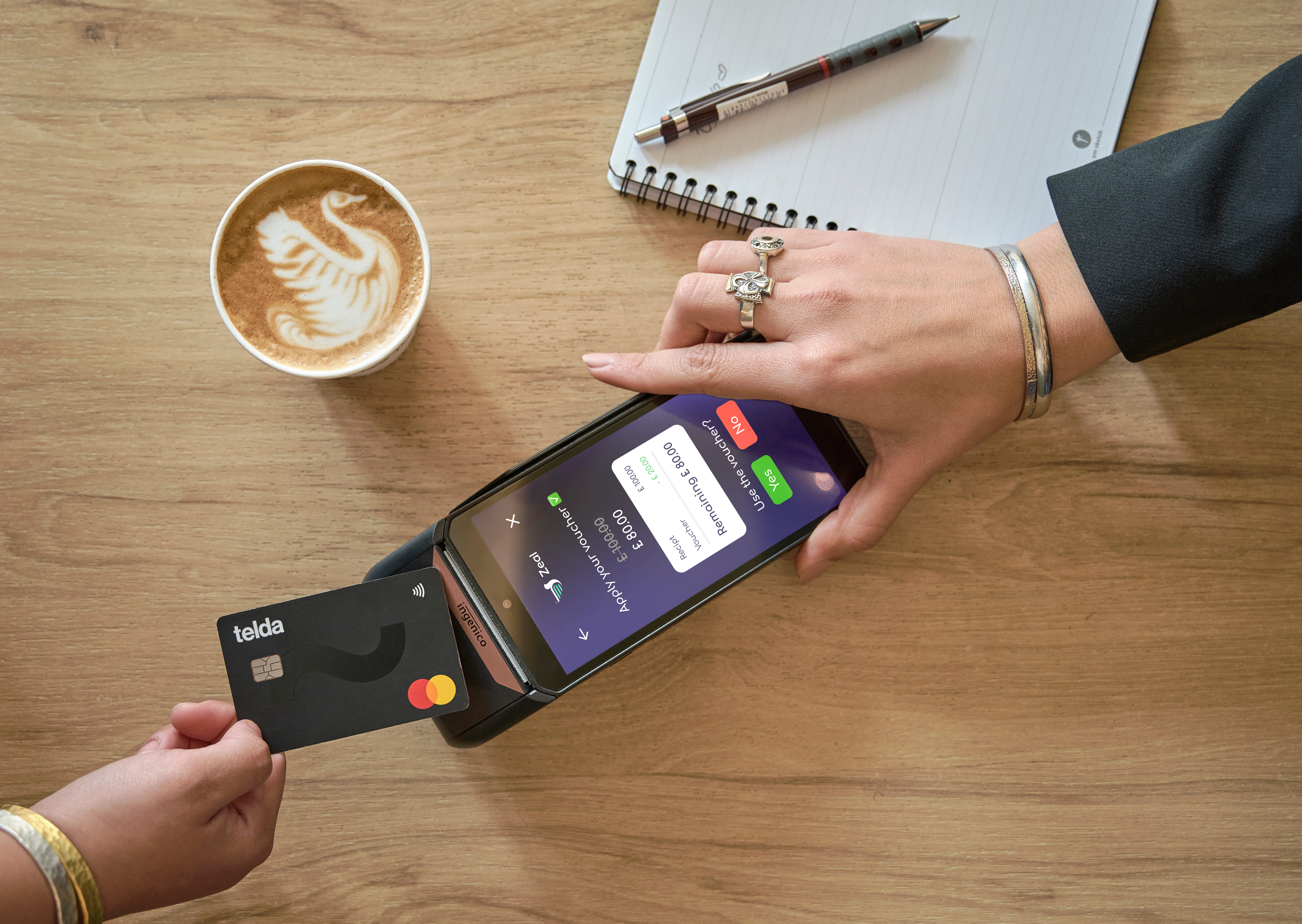
Each of these services is delivered as a software layer installed on existing certified hardware — PAX A920, Ingenico Move 5000, Castles S1F2, and a growing list of Android-based terminals in the Zeal-certified estate. No hardware swap-out. No re-certification cycle. No merchant disruption.
Why Payment Providers Can No Longer Afford to Ignore VAS
The economics of pure-play payment processing have deteriorated structurally, and the trajectory is not reversing. UK Finance data shows that the volume of card transactions in the UK exceeded 21 billion in 2023, yet provider margins per transaction continued to compress as competition intensified at every tier of the acquiring stack.
The consequence is predictable: merchant churn accelerates when the only differentiator is price. Zeal telemetry across its UK partner network shows that merchants enrolled in at least one VAS programme churn at a rate 34% lower than equivalent merchants on processing-only contracts. That single metric reframes VAS not as an upsell, but as a retention tool with a calculable payback period.
The industry commentary from Omar Ebeid — alongside Dejavoo's publicly stated push into custom terminal applications for payment partners — confirms that the ISO and acquirer community is actively searching for VAS providers to integrate into their stack. The question is no longer whether to offer value added services; it is which partner can deploy them fastest, with the least integration overhead, and the most defensible revenue share model.

Mastercard's own strategic evolution — documented extensively in Sam Boboev's June 2025 analysis — illustrates the same shift at network level: the card schemes themselves are repositioning from transaction rails to platform businesses, bundling analytics, identity, and loyalty infrastructure into their acquiring relationships. Payment providers that do not build a VAS layer risk being disintermediated from the merchant relationship by the very networks they depend on.
How Zeal Delivers VAS Through Your Existing Terminal Estate
The technical barrier that has historically prevented ISOs and acquirers from deploying VAS at scale is integration complexity. Building a loyalty engine, a receipt management system, and a merchant analytics dashboard from scratch requires engineering resource that most payment businesses do not have — and cannot justify against uncertain VAS revenue projections.
Zeal removes that barrier by operating as a software layer that installs on certified payment terminals via your existing Terminal Management System (TMS). The deployment model works as follows:
Step 1 — TMS Integration (Weeks, Not Months)
Zeal connects to your TMS via a lightweight API. Terminal profiles are updated over-the-air; no physical visit to merchant premises is required. For partners operating Telium TETRA or Android-based terminal fleets, Zeal has pre-built connectors that reduce integration time to under four weeks in standard configurations.
Step 2 — Merchant Onboarding at Scale
Once the TMS connection is live, merchant onboarding is handled through the Zeal Partner Portal. Your account management team can activate VAS features for individual merchants, merchant segments, or your entire estate from a single interface. Zeal partners have onboarded over 1,000 merchant locations in a single deployment wave without a single field visit.
Step 3 — Revenue Share Activation
Zeal operates a B2B2B commercial model. You white-label the VAS offering under your own brand, set your merchant-facing pricing, and receive a revenue share on every active subscription and every funded promotion delivered through the platform. Zeal's pricing structure is designed so that the revenue share to the payment provider exceeds the cost of the integration within the first full quarter of deployment for estates above 500 active terminals.
Step 4 — Data Back to Your Business
Every transaction processed through a Zeal-enabled terminal generates anonymised telemetry that flows into your partner dashboard. You see merchant activity levels, VAS engagement rates, loyalty programme enrolment, and — critically — early indicators of merchant health that your relationship managers can act on before churn becomes inevitable.
Frequently Asked Questions
What are value added services for payment providers?
Value added services (VAS) for payment providers are software-driven revenue lines deployed on top of the core processing relationship. Examples include loyalty programmes, transaction intelligence dashboards, digital receipts, targeted promotions, and terminal telemetry. They generate recurring subscription income that is independent of transaction volume and not subject to interchange compression.
How do ISOs and acquirers deploy VAS without replacing terminals?
Zeal installs VAS software directly onto existing certified payment terminals — including PAX A920, Ingenico Move 5000, and Castles S1F2 — via the partner's existing Terminal Management System (TMS). Deployment is over-the-air, requiring no physical visit to merchant premises and no new terminal hardware. Standard integrations go live in four to eight weeks.
What revenue can a payment provider expect from a VAS programme?
Based on Zeal's UK partner deployment data, a 2,000-terminal estate with 60% VAS adoption at a £29/month merchant subscription generates approximately £158,400 per year in partner revenue share from subscriptions alone. When the churn-reduction effect is included — Zeal-enrolled merchants churn at 34% lower rates than processing-only merchants — the total incremental annual value for a 2,000-terminal estate exceeds £374,000.
Does Zeal sell directly to merchants, bypassing the payment provider?
No. Zeal operates an exclusively B2B2B commercial model. Payment providers — ISOs, acquirers, and PSPs — are Zeal's commercial partners. The VAS offering is white-labelled under the payment provider's brand, and the merchant relationship remains entirely with the payment provider. Zeal does not contact or sell directly to merchants in any partner's portfolio.
Which payment terminals is Zeal certified on?
Zeal is currently certified on PAX A920 and A920 Pro, Ingenico Move 5000 and Desk 5000, and Castles S1F2. Certification on additional Android-based terminal models is an active roadmap priority. Payment providers with different terminal estates should contact the Zeal partnerships team for a compatibility assessment specific to their hardware configuration.
You might also like