Value Added Services for PDQs and Card Machines: What UK ISOs Should Resell
Boost your revenue with essential value added services for card machines. Discover how UK ISOs can leverage agnostic terminal integration to drive merchant growth.

What are Value Added Services (VAS) for PDQ machines?
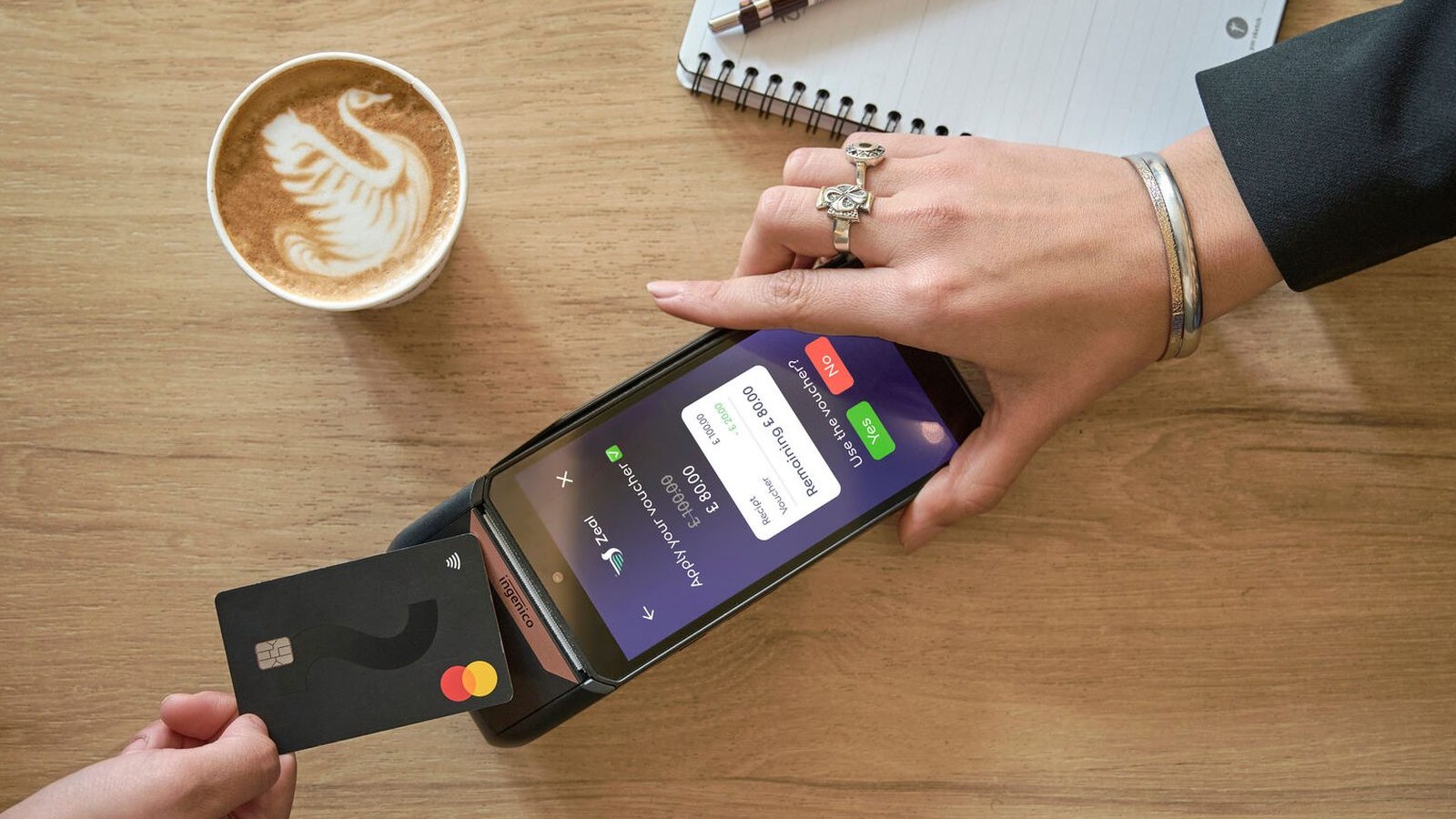
Value added services for card machines are non-core payment features delivered directly on the payment terminal, beyond authorising and settling transactions. Examples include loyalty programmes, dynamic currency conversion, tax-free shopping, and real-time analytics, all surfaced on the terminal screen without additional hardware.
British payments professionals still use "PDQ" (Process Data Quickly) as shorthand for any card-present terminal. It's a legacy term that stuck, and you'll hear it across acquirer sales teams and merchant services contracts alike. Technically, a PDQ is just a terminal that processes card transactions. What's changed is what runs on top of that transaction layer.
The shift toward Android-based "smart PDQs" from manufacturers such as PAX, Ingenico, Verifone and Sunmi has turned the terminal into an open platform. Instead of firmware locked to a single payment application, these devices run multiple apps simultaneously. That architectural change is what makes VAS deployment practical at scale.
Bridging those apps to the underlying payment flow requires a VAS gateway: a middleware layer that sits between the hardware and the software services, handling authentication, data routing and terminal management. Worldline notes that VAS allows merchants to offer services like loyalty, DCC and tax-free shopping directly on the payment terminal screen. Zeal operates precisely that kind of value-added services layer, which PSPs deploy via the Zeal SDK without replacing a single device.
The foundational point: a smart PDQ plus a VAS gateway turns a cost-of-acceptance device into a revenue-generating platform.
1. Card-linked loyalty and rewards
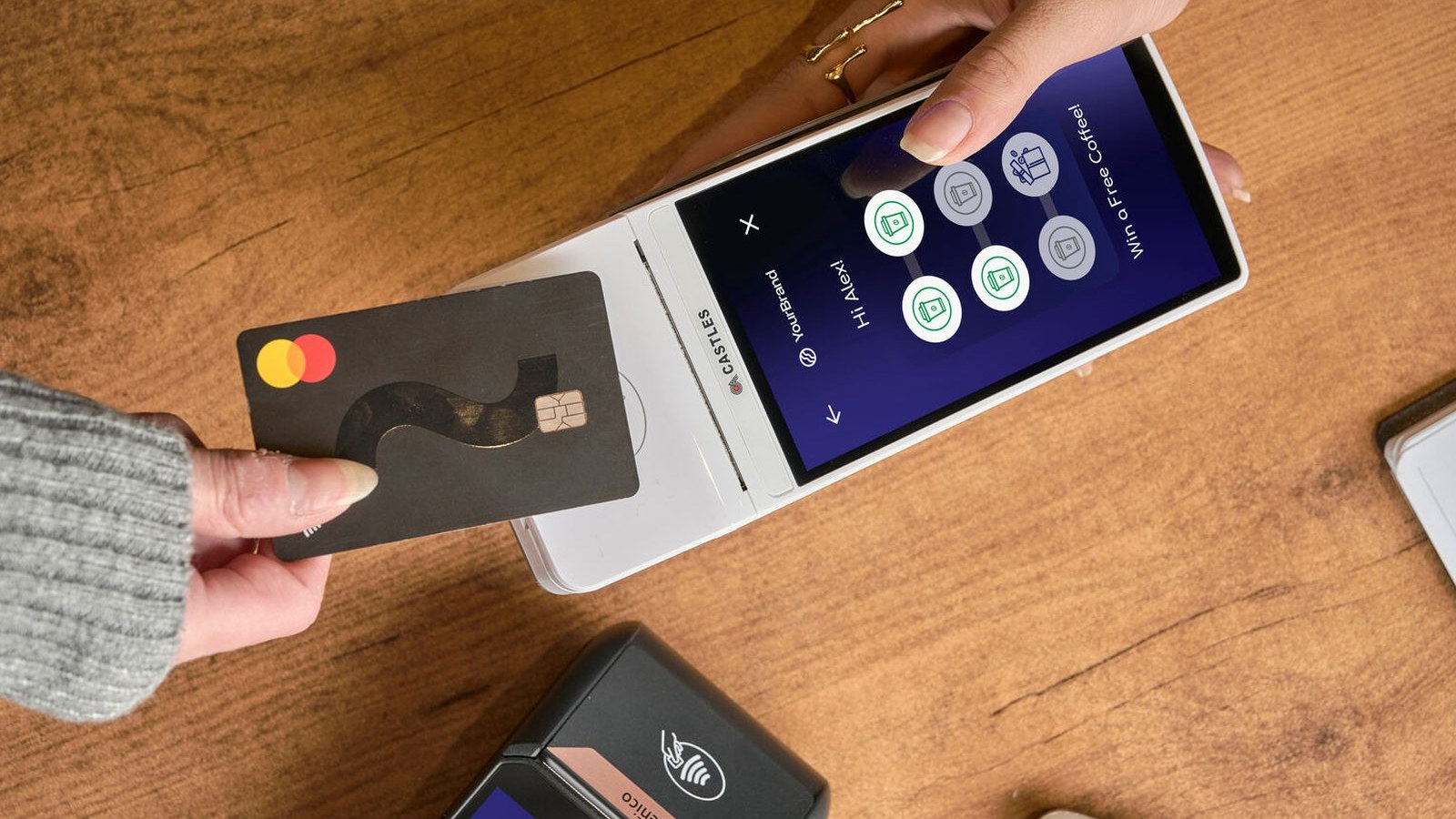
PDQ terminal value added services rarely generate more merchant stickiness than card-linked loyalty. The mechanism is straightforward: the Zeal SDK uses passive card-token identification to recognise a returning cardholder at the moment of payment, with no app download, no QR code and no action required from the customer. 79% of shoppers are more likely to join a rewards programme that doesn't require a physical card, which makes card-linked loyalty far easier to sell than traditional stamp-card schemes.
From the merchant's perspective, points calculation happens automatically on the payment terminal at the moment of authorisation. Staff don't change their workflow. The merchant sees every transaction, redemption and customer visit through the Merchant Dashboard, with no manual reconciliation. Integrated loyalty programmes can increase overall merchant revenue by 5% to 10%, according to Clearly Payments, which gives PSPs a concrete commercial case to put in front of prospects.
For PSPs, the strategic value is reduced merchant churn. A merchant running an active loyalty programme has a live customer database tied to their terminal estate. Switching acquirers means dismantling that. Card-linked identification also opens more advanced use cases, such as recognising corporate cardholders for employee benefits or identifying enterprise-tier customers for exclusive pricing, without any bespoke hardware.
Card token captured passively at payment
Points calculated and applied on-terminal
Customer notified at checkout, no app required
Merchant reviews performance via Merchant Dashboard
The strongest argument for card-linked loyalty is the one merchants make themselves: their customers keep coming back without being asked to change how they pay.
Dynamic Currency Conversion is the next value-added service worth examining, and it follows a similar pattern: value delivered silently at the terminal, revenue shared back through the acquiring chain.
2. Dynamic Currency Conversion (DCC)
Dynamic Currency Conversion lets a payment terminal detect a foreign-issued card and offer the cardholder the choice to pay in their home currency rather than sterling. The terminal reads the card's BIN range, identifies the issuing country, and presents the converted amount with the exchange rate disclosed before the customer taps or inserts. Transparency is built into the process: the cardholder sees the exact cost in euros, dollars, or whichever currency applies, so there's no ambiguity at the point of payment.
The commercial model works through a rebate structure. The merchant earns a passive share of the conversion margin on every eligible transaction, creating a revenue stream that requires no action from staff. According to Shift4, DCC allows merchants to earn a passive rebate on every foreign card transaction. For high-footfall locations such as hotels, tourist attractions, and city-centre restaurants, this compounds quickly across volume.
How it works on the terminal:
The payment terminal reads the BIN range on the foreign card automatically
The DCC engine calculates the converted amount and displays the exchange rate to the cardholder
The cardholder accepts or declines; declining means the transaction settles in sterling as normal
The merchant receives a rebate from the conversion margin, settled periodically
Agnostic payment terminal integration means DCC runs across PAX and Ingenico hardware via VAS gateways, with no separate device required
For ISOs, DCC is one of the simplest value-added services to resell: the revenue case is self-evident and the data it generates feeds directly into the transaction-level reporting covered next.
3. Real-time merchant analytics and reporting
Integrated payment terminal features have moved well beyond the end-of-day Z-report. Modern VAS gateways provide a Merchant Dashboard that surfaces transaction data in real time, so merchants can track peak trading hours, basket sizes, and staff performance across every terminal on their estate without waiting for a manual reconciliation run.
For PSPs managing large multi-site deployments, unified reporting is the practical differentiator. A single cloud-based view across hundreds of payment terminals removes the need for manual data entry and eliminates the reconciliation gaps that appear when EPOS systems don't talk to each other. The Merchant Dashboard aggregates terminal-level data into one place, and because the Zeal SDK sits natively on the payment terminal, that data flows automatically into the reporting layer without bolt-on middleware or custom integrations.
"Real-time visibility changes how merchants operate. Knowing which terminal is underperforming at 2pm on a Tuesday is actionable. Receiving a PDF report the next morning is not."
The reporting layer also gives PSPs a conversation starter with enterprise retail and F&B buyers who already expect this level of visibility from their EPOS systems. Bringing it to the payment terminal, without new hardware, closes a gap most merchants didn't know their acquirer could fill.
Beyond transaction data, the payment terminal can also become a capture point for customer contact details, which is where digital receipts come in.
4. Digital receipts and marketing capture
Digital receipts have shifted from a convenience feature to a genuine revenue tool. Thermal paper costs add up across a large estate, and unified payment terminal management makes enabling digital receipts across every device a single configuration change rather than a site-by-site project.
The real value, though, is marketing capture. When a cardholder opts in to receive their receipt by email, the merchant captures a GDPR-compliant contact at the exact moment of purchase. As ReceiptHero notes, value-added services are the key to capitalising on customers' shifting preferences for digital-first interactions. That opt-in feeds directly into post-visit marketing, without requiring a separate sign-up flow or loyalty app download.
Custom branding on digital receipts extends the opportunity further. A well-designed receipt carries the merchant's logo, social handles, and a targeted follow-up offer, turning a transactional touchpoint into a retention mechanic. On Android-based payment terminals such as Sunmi and Castles, digital receipt functionality deploys through the same SDK layer as other value-added services, so there's no additional hardware and no EPOS integration required. Enablement is fast, and the merchant sees the uplift immediately.
The practical takeaway: digital receipts are low-effort to enable but generate compounding value through GDPR-compliant email capture, reduced paper costs, and branded post-purchase engagement.
Key takeaways: choosing the right VAS strategy
The sections above cover individual features, but the real question for ISOs is which combination of value-added services delivers the clearest commercial return. With ISOs accounting for over 50% of all new merchant acquisitions in the UK, according to Merchant Savvy, VAS reselling is where you differentiate your proposition and protect margin.
Four criteria should drive your selection:
Hardware-agnosticism is non-negotiable. Your merchant estate spans PAX, Ingenico, Verifone and more. Any VAS layer that only runs on a subset of that hardware creates support overhead and gaps in data. Prioritise solutions certified across multiple device families from day one.
Card-linked loyalty beats app-based schemes. App downloads create friction that most cardholders won't accept. Passive card-token identification removes that barrier entirely, recognising 75 to 90% of returning customers at the payment terminal with no action required from the cardholder.
Transparent revenue share protects your model. Commission structures should be clearly defined before you sign. Opaque VAS deals erode trust quickly when merchants start asking questions. Look for partners who publish straightforward reseller terms.
SDK-based deployment means no EPOS integration. Solutions that run on the payment terminal via an SDK ship to existing hardware without EPOS changes or merchant downtime. That speed to market is the difference between a feature you can sell this quarter and one stuck in an IT backlog.
Get these four criteria right, and your VAS stack becomes a retention tool as much as a revenue line, which sets up the broader case for why platforms matter over point solutions.
The bottom line: turning terminals into platforms
Value-added services are no longer a differentiator for ISOs: they're a baseline expectation. Merchants who process payments through a card-present estate increasingly expect the terminal to do more than authorise transactions. PSPs that can't offer loyalty, analytics, digital receipts, or Zeal Pledge alongside payment processing are ceding ground to those who can.
The practical barrier has always been deployment complexity. Ripping out existing hardware, negotiating new integrations, and retraining staff is a cost most merchants won't absorb. Zeal removes that barrier. The Zeal SDK runs natively on the payment terminal, bridging the gap between hardware and digital engagement without a single hardware swap. Because Zeal is hardware-agnostic across PAX, Ingenico, Verifone, Sunmi, Urovo, Aisino and Castles, and acquirer-agnostic across any PSP estate, PSPs can deploy value-added services onto the terminals merchants already use today.
For an ISO, the commercial case is straightforward. Adding a VAS gateway to your proposition raises revenue per terminal, reduces merchant churn, and creates stickier relationships built on data and outcomes rather than rate alone. Each capability covered in this article, from passive customer identification to merchant analytics, is accessible through a single SDK integration via the PSP Portal.
The next step is a conversation with the Zeal team. Bring your estate size, your terminal mix, and the merchant segments you want to target. The integration path is defined by what your merchants need, not by hardware constraints.
The terminals are already there: the question is whether you're extracting full value from them.
You might also like