Reach shoppers at the moment they pay
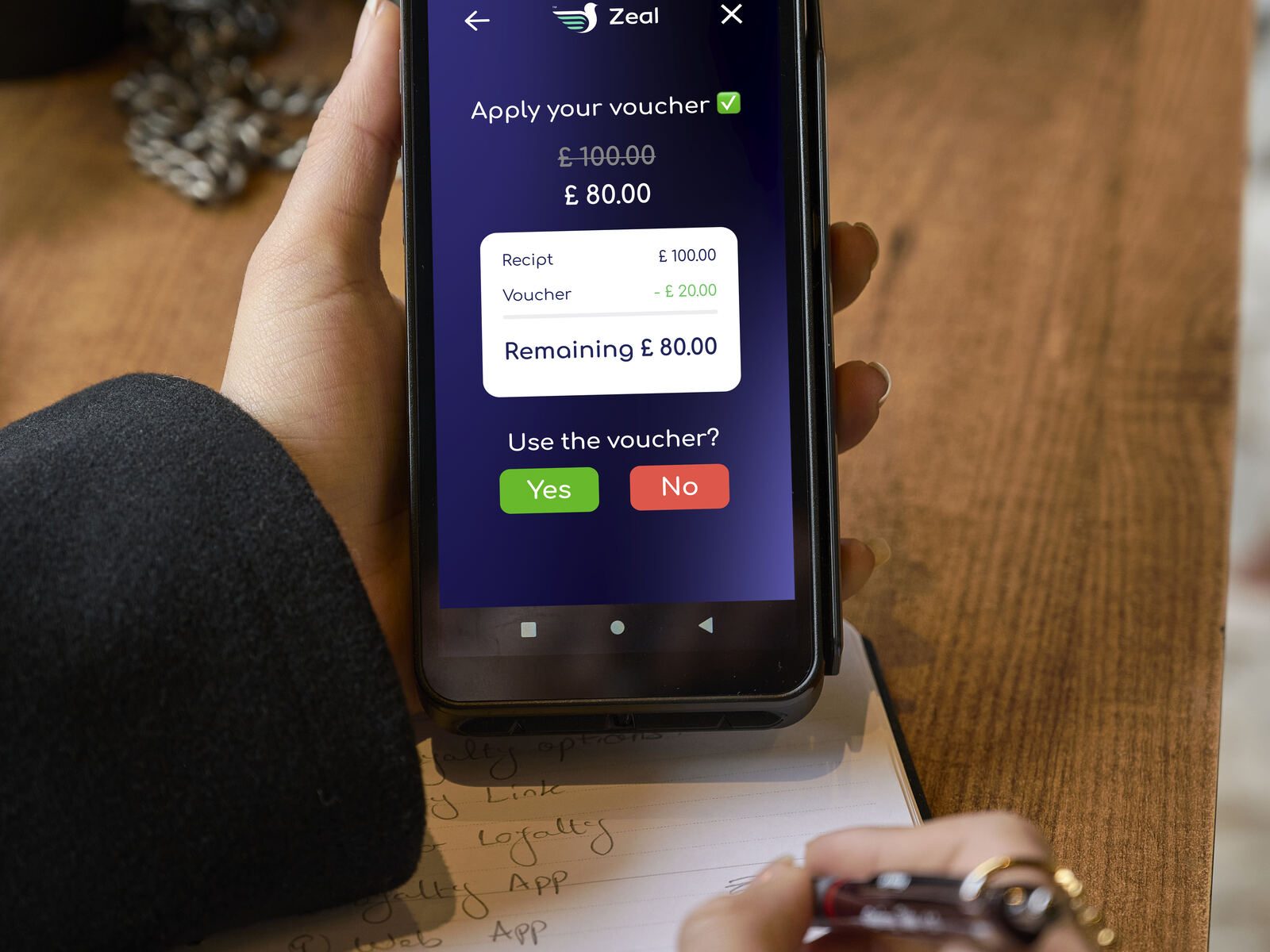
In store brand promotions usually end at the shelf edge. Zeal carries them to the point of payment: an fmcg loyalty programme where brand funded promotions and trade promotion budgets reach the shopper through the card machine, with redemption recorded at the till and no app to download.
Print your own branded receipt
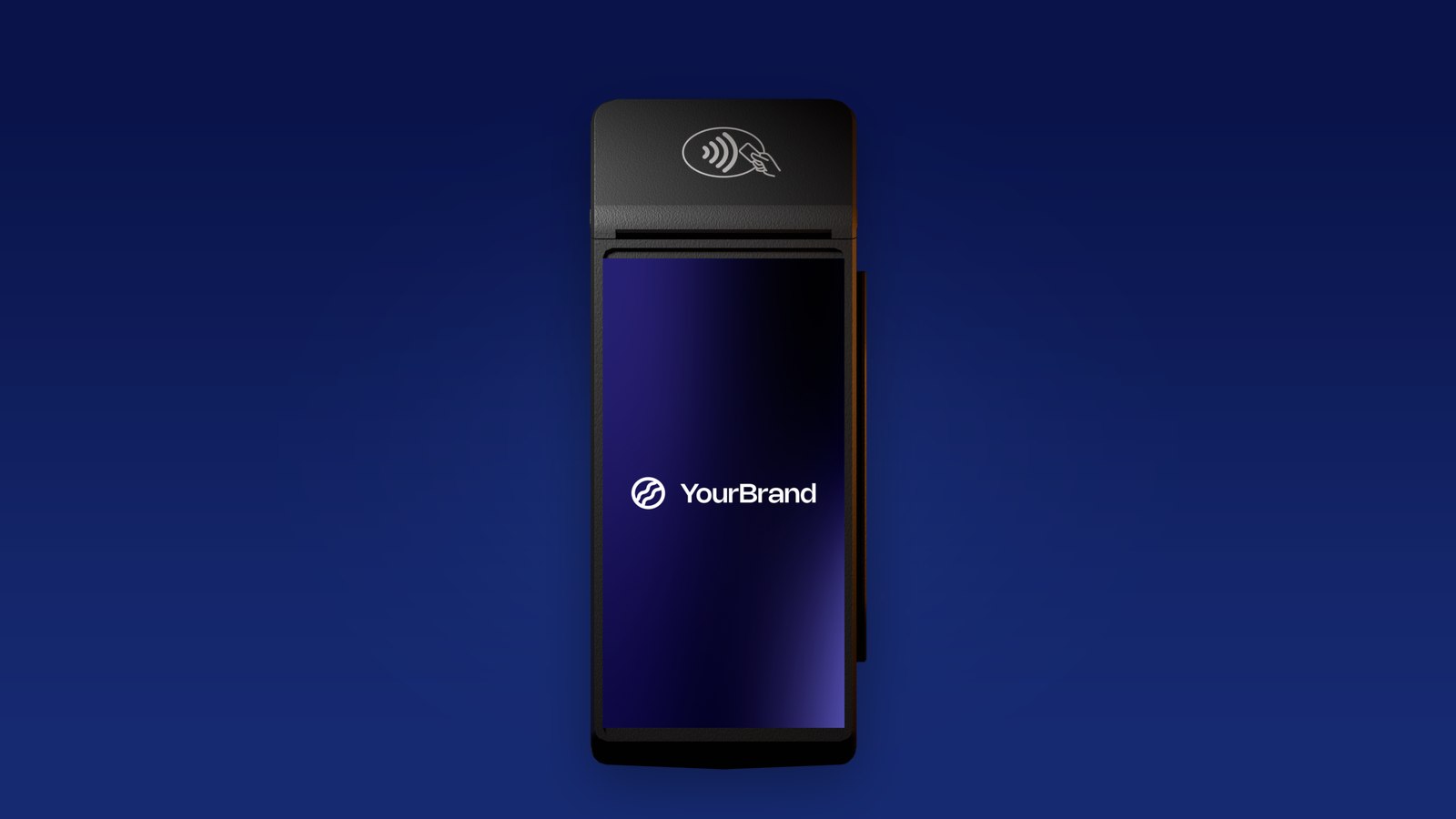
Type a company name (payment provider or merchant, either works), then keep scrolling. The card machine does the rest: your name on the screen, your receipt out of the printer, and your customer's loyalty balance already on it.
Your brand on the receipt
Works for a payment provider or a merchant. Prefer a click? Use the button.
The World's #1 VAS Solution on Payment Terminals


The shelf-edge problem
Print and shelf-edge promotions reach the shopper before the decision, but cannot confirm whether the product was bought, by whom, or whether the same shopper returned. Digital coupons solve part of it and introduce an app the shopper has to have.
The terminal as a promotional surface
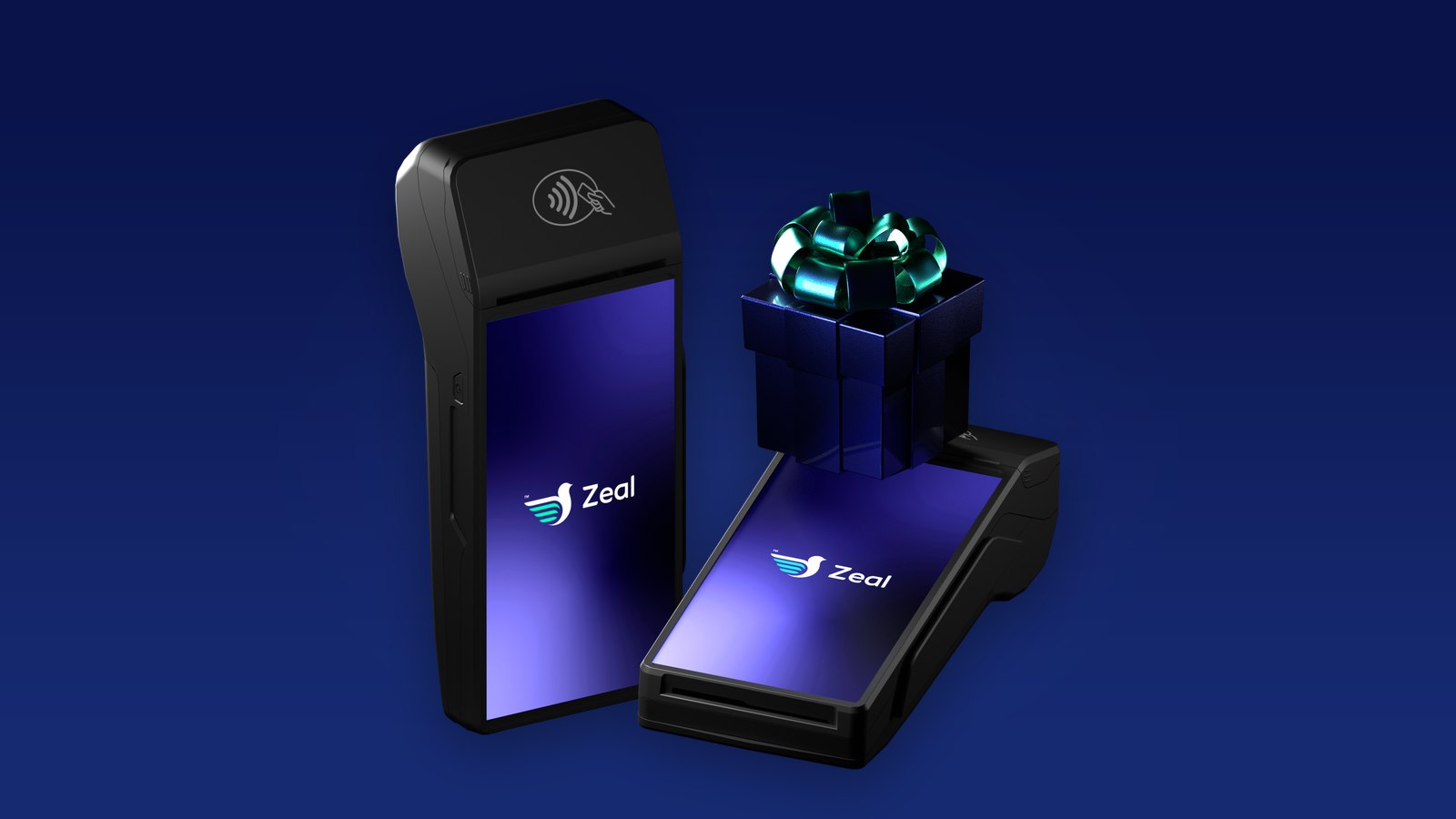
Every card-paying shopper touches the payment terminal. That makes it the one point in the journey where a brand can reach a shopper without asking them to download or scan anything first.
Funded by the brand, run by the retailer
Offers can be funded by the manufacturer and delivered through the retailer's existing terminals, within the commercial and approval structure agreed between them.
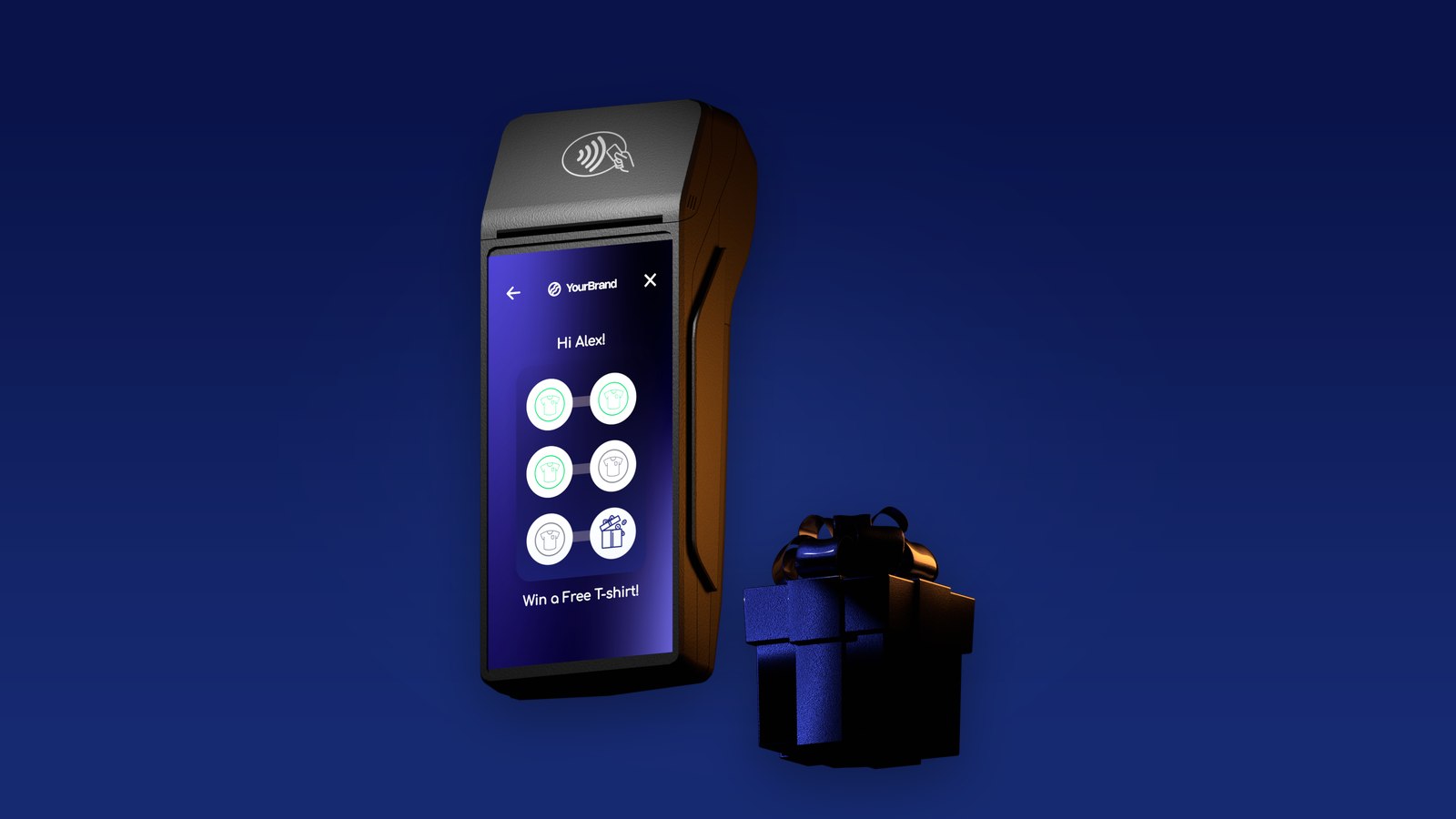
Trade promotion that reports redemptions instead of estimates
Trade promotion is one of the largest lines in an FMCG budget and one of the least observable. Money goes into the retailer, something happens on shelf, and the evaluation afterwards is a reconstruction from sales data rather than a record of what actually reached a shopper.
The gap is not measurement discipline. It is that the promotion and the purchase happen in different places. A shelf barker cannot know who read it, a leaflet cannot know who acted on it, and by the time the till records a sale the connection between message and decision has been lost.
Delivering the offer at the terminal collapses that distance. The message and the transaction happen in the same moment on the same device, so an offer that is taken up is an offer that is recorded — not modelled, not attributed after the fact, recorded.
It also reaches a shopper the digital coupon world cannot. App-based couponing selects for the minority who install the app and remember to open it; the terminal reaches everyone who pays by card, which in most categories is nearly everyone.
The structure is deliberately conventional: the brand funds, the retailer delivers, and the terminal estate is the retailer's own. What changes is not the commercial relationship but the quality of what comes back at the end of it.
Redemption you can see
Because the offer is applied during the transaction, redemption is recorded rather than estimated. Every campaign reports offers presented against offers taken, measured at the till that delivered them.
That gives a brand team something rare in trade: a number that survives contact with finance. Redemption is a settled transaction, not an impression, a scan rate or a panel projection.

What a campaign looks like in practice
A defined offer, a defined product or product group, a defined set of stores and a defined window. The offer surfaces on the terminal during payment in participating sites, and the terms are shown in full rather than abbreviated.
Scope depends on the estate. What can be targeted, and whether an offer can attach to a specific line rather than the basket as a whole, is confirmed against the retailer's EPOS and terminal integration before the campaign is committed.
Boundaries we hold deliberately
Screen order, consent and customer comprehension are designed deliberately. A terminal screen should never create ambiguity about whether the customer is paying the merchant or accepting a promotion.
This is not a constraint we work around; it is the reason the channel is viable at all. The payment terminal earns its trust from being predictable, and a promotion that muddies the payment moment would spend that trust for both the brand and the retailer.
What is a brand-funded promotion?
A brand-funded promotion is an offer paid for by the manufacturer rather than the retailer, delivered to shoppers through the retailer's own channels and stores. In an FMCG context it usually sits within a trade promotion budget, and its defining commercial question is whether the brand can see what its money actually bought.
What this channel is not
It is not a substitute for distribution or availability: an offer cannot sell a product that is not on the shelf. It is not brand building either — it reaches a shopper seconds before they pay, which is the right moment to influence a choice and the wrong one to introduce a brand. And it is bounded by the retailer's footfall, so reach is whatever the estate actually transacts.
Brand and FMCG questions
Who needs to approve a brand-funded campaign?
The retailer, because it is their estate and their customer relationship, and the brand, because it is their funding and their claim. Zeal supplies the delivery mechanism and the reporting. The commercial terms sit between retailer and brand exactly as they do for any other trade activity.
Does the shopper need an app or a loyalty card?
No. The offer is presented on the terminal as part of the payment the shopper is already making. That is the point of the channel: it reaches the whole card-paying population rather than the subset who have installed something.
How is redemption reported back to the brand?
Against the offer and the window, at the level of aggregation agreed with the retailer. What personal data, if any, is shared is decided in the deployment design and governed by the retailer's own privacy position, not by the brand's preference.
Can this run as a pilot in a small number of stores?
That is the sensible way to start. A defined cohort of stores, a defined window and a control group where possible, so the result can be read against something rather than judged on its own. Rollout beyond the pilot follows the same cohort-based approach.
If you have a line you want trialled and a retailer whose terminals could carry it, that is enough to scope a pilot. Bring the category and the estate and we will tell you what is deliverable.
Talk to the Zeal team about a brand pilotActivating Zeal on your card machines is a breeze
Choose your integration path
Connect host-to-host through our APIs or embed the on-terminal SDK. You get a sandbox, an integration guide and a reference implementation from day one.
Share your estate details
Send your merchant data file with TIDs, MIDs and terminal models. We prepare signed builds for each terminal type, with release notes and a rollback plan.
Pilot, then roll out
We prove the experience on a pilot cohort with hands-on support, then deploy remotely across your estate through your TMS. No hardware changes, no engineer visits.
Go live and activate
Your merchants get onboarding flows, training material and ready-made campaign templates for their first 90 days, and you track activation and usage by cohort.
This is how we’re revolutionising payments for our partners
See what Zeal delivers in the field. Our partners earn new revenue from their terminal estates, and their merchants get customer identification, loyalty and insight at the point of payment.
Merchants run Zeal on the card machines they already own.
More repeat visits for restaurants running loyalty on Zeal.
Customer profiles created for merchants using Zeal.
Don’t take our word for it

Manos Perdikaris
Business Unit Manager


Jean-Philippe Niedergang
CCO and CEO of EMEA Region


Boris Ferlet
SVP, Android & Partner Ecosystem


Ahmed Hanafi
Founder & CEO


Mostafa Al Sagheer
CEO

Zeal has flexible pricing to fit your business needs
Every agreement is shaped with your commercial team: revenue share on a joint go-to-market, or an annual licence across your MIDs.
Revenue share or annual licence
One integration, two commercial models. Partner on revenue share, where Zeal goes to market inside your merchant proposition and we share the value-added services revenue it creates. Or license annually, a fixed yearly fee that activates Zeal across the MIDs you nominate, with predictable costs from day one.
Enable your card machines to:
Identify customers and offer exclusive rewards
Offer zero-friction card-linked loyalty
Showcase merchant branding and collect feedback
Provide merchants with powerful analytics
Provide you with powerful customer behaviour insights
Want to learn more?
Frequently asked questions
Zeal transforms your card machines into intelligent customer engagement tools, enabling real-time customer insights, visibility over in-store customers, and frictionless loyalty programmes for your merchants.
By integrating Zeal, you open new revenue streams through value-added services, differentiate your offering in a competitive market, and significantly boost merchant retention.
Zeal enables your card machines to identify customers through their payment cards, recognising employees, airline passengers, or telecom customers at the point of sale. This allows you to offer tailored rewards linked to existing corporate benefits or loyalty programmes. With Zeal, you can strengthen strategic partnerships and drive higher transaction volumes for your merchants.
Yes. Zeal is fully compliant with PCI DSS, GDPR, and follows industry best practices for data protection and security. Our technology is designed with privacy and compliance at its core.
Zeal is also recognised by industry leaders such as Visa and Ingenico, and has trusted partners worldwide, reinforcing our commitment to innovation, reliability, and global scalability.
Choose your integration path (host-to-host API or on-terminal SDK), share your merchant data file with TIDs, MIDs and terminal models, and we handle the rest: signed builds, a supported pilot, then remote deployment across your estate through your TMS.
Zeal runs on supported Android and Linux payment terminals. Compatibility depends on the terminal model, firmware, payment application, payment provider and acquirer route. We confirm the supported setup and any required approvals before scheduling a rollout.
Yes. Zeal is built for global scalability and there are active card machines with Zeal in multiple markets globally. With multilingual support, regional compliance, and flexible integration options, Zeal can be activated anywhere, enabling consistent value-added services for your merchants worldwide.