Card-Linked Loyalty vs Mobile Apps: Which Drives Repeat Visits?
Compare loyalty apps and card-linked loyalty across enrolment, identity, checkout, data, cost and operations to choose the right enterprise model.

Neither loyalty apps nor card-linked loyalty universally drives more repeat visits. Apps are stronger for discovery, order-ahead, rich profiles and persistent engagement. Card-linked or terminal-linked recognition can remove a separate scan at checkout and may increase the share of eligible enrolled payments that the programme records, subject to identifier coverage, enrolment and the implementation. For many enterprise retailers, the best architecture combines both, then tests incremental visit frequency, margin and retention against a control.
Card-linked loyalty vs mobile apps is a choice between reach and engagement depth
A loyalty app asks customers to discover, install, enrol, sign in and remember a merchant-controlled interface. In return, it can support browsing, order-ahead, account management and persistent reward progress.
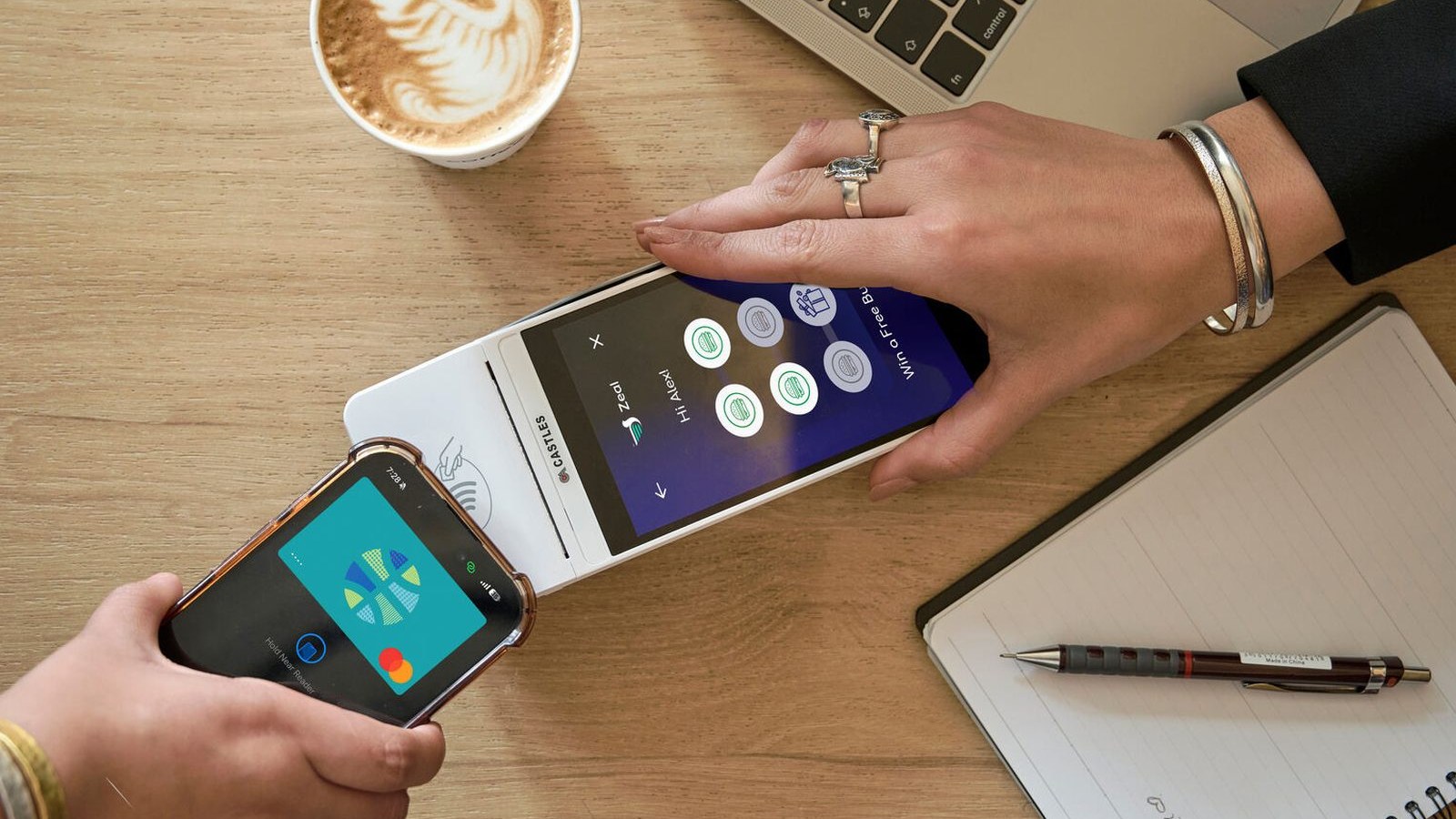
With card-linked loyalty, an enrolled payment credential is matched to programme rules and may trigger a benefit without a separate loyalty scan. The important caveat is that activation can still be explicit. American Express UK, for example, requires an offer to be saved to a specific eligible card before purchase (see how Amex Offers work in the UK).
The real comparison is the participation tax: the effort required to discover, join, identify, earn and redeem. App fatigue raises that tax; card-linking lowers its checkout component but may still rely on an app, bank portal or website for discovery. No credible UK randomised study found for this review establishes that either architecture universally produces more repeat visits.
What do card-linked, terminal-linked and app-based loyalty mean?
The categories overlap, so buyers should define the software and data flows rather than judging labels.
- Loyalty app
- A merchant or programme application that manages membership, content, offers, order-ahead, reward progress and communications. Identification may use login, barcode, QR code, loyalty programme cards or a linked payment credential.
- Card-linked loyalty
- A programme in which an enrolled payment credential is associated with an offer or loyalty identity. An eligible transaction can trigger a reward under the programme terms without presenting a separate loyalty reward card at checkout.
- Terminal-resident SDK
- A software component deployed within the approved payment-terminal environment. Subject to payment-application, PSP, acquirer and security permissions, it can add value-added services such as customer enrolment, feedback, reward display or recognition using an approved reference.
- Value-added services (VAS)
- Non-payment capabilities delivered around the payment flow, such as loyalty, feedback, merchant analytics or digital receipt choices. VAS must not interfere with payment acceptance or scheme, acquirer and PCI controls.
- PSP portal
- A central operational interface through which a PSP or acquirer can view appropriately governed merchant, terminal and service information. Its fields and permitted uses depend on the product, contracts and data-protection design.
A payment credential is not a person. Shared cards can merge people, while several cards, device-wallet tokens or reissues can split one person. Apple Pay uses a device-specific Device Account Number rather than sending the physical card number to the reader (read Apple’s UK security explanation). Identity quality is an architectural question.
How do loyalty apps and card-linked systems compare operationally?
The right option depends on the customer job and the retailer’s existing estate.
| Decision area | Loyalty app | Card-linked or terminal-linked model |
|---|---|---|
| Enrolment | Explicit install, registration and authentication create friction but make membership visible. | A linked card can reduce repeat identification effort after enrolment, but activation and privacy notice may still be required. |
| Discovery | Strong surface for browsing offers, stores, menus and reward progress. | Usually needs another discovery channel, such as issuer app, merchant website, terminal prompt or receipt. |
| Identity | Logged-in first-party account can unify known activity across supported channels. | An approved payment reference can recognise a returning credential within its defined domain, not necessarily a unique person. |
| Order-ahead | Well suited to menu, stock, booking, collection and delivery journeys. | Not an order-ahead interface by itself; it can complement an app or web account. |
| Checkout recognition | May require login, barcode, QR code or staff-assisted scanning unless payment is also linked. | Can remove a separate scan for eligible enrolled payments, subject to token availability and programme rules. |
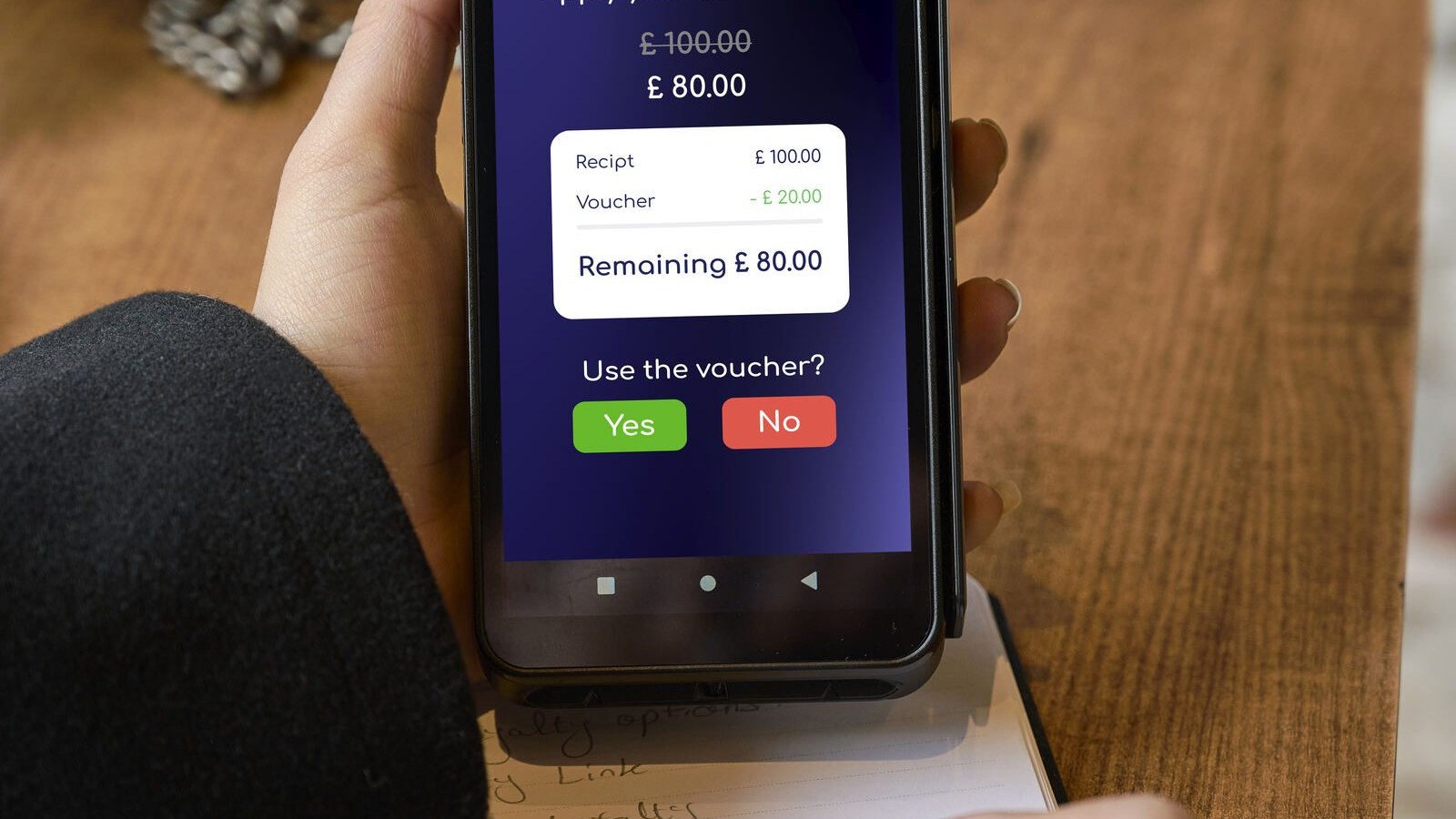
| Redemption | Can show a catalogue, vouchers, progress and choices before checkout. | Can apply or display an eligible reward in the payment journey, but customer control and reversals must be designed carefully. |
| Data quality | Rich declared profile and behavioural data, but only for active, authenticated users. | Transaction-heavy coverage, but credentials can fragment by card, wallet, MID, channel or provider. |
| Cost and burden | App development, releases, acquisition, support, content operations and EPOS/CRM integration. | Certification, terminal deployment, TMS coordination, token governance, reward operations and partner dependencies. |
This is not a ranking. An app can also link cards, and terminal-resident loyalty software can hand customers into a richer app or web journey.
Why can card-linked recognition reduce friction without proving more visits?
Friction
Once an eligible credential is enrolled, card-linked recognition can remove a separate scan and reduce missed earning when customers forget an app. Clear terms, lawful processing and understandable redemption still matter.
Recognition
An approved token, merchant-scoped reference or Payment Account Reference may support repeat recognition. EMVCo says PAR can link PAN and payment-token transactions for use cases including merchant loyalty, while tokens may be restricted by device, merchant or presentation domain (review EMVCo’s payment-tokenisation use cases). Each PSP, acquirer, processor and scheme must confirm availability and permitted use.
Data
Card-linked models may capture more eligible payment events; apps can collect richer declared preferences, product interactions and order context. Neither dataset is complete by default.
A peer-reviewed multivendor study found that mobile-app adoption increased overall purchasing and redemption, but users visited more stores and spent less at the focal store. It was not a UK card-linked comparison (read the study in Information Systems Research). Separate field research found that purchases accelerated as customers approached a reward, supporting visible progress rather than any one interface (read the goal-gradient research).
What hidden costs should enterprise retailers model?
For app-based programmes, assess the operating model, not only the initial build:
- Product: iOS and Android releases, accessibility, security, identity and APIs.
- Acquisition: media, incentives and staff prompts for completed registrations.
- Support: login, scan, password and reward disputes at checkout.
- Integration: reconciliation across app, EPOS, CRM, payment terminal and loyalty ledger.
- Content: offers, notifications, catalogues and experiments.
Card-linked programmes have different, not zero, costs: certification, TMS deployment, terminal coverage, token availability, fraud, reversals, consent and rights handling.
Tokenisation does not make data anonymous. The ICO says pseudonymised data remains personal data where additional information can attribute it to an individual (read the ICO’s pseudonymisation guidance). PCI DSS prohibits storing sensitive authentication data after authorisation (consult PCI DSS v4.0.1). PCI scope depends on the full architecture.
How should a combined app and card-linked journey work?
A complementary architecture can use the app for discovery and an approved payment reference for low-friction recognition.
- Define the proposition. Explain enrolment, earning, progress, redemption, unlinking and exit.
- Map identity domains. Document references across physical cards, wallets, online checkout, MIDs and PSPs.
- Collect permission transparently. Document a lawful basis by purpose and assess marketing separately under PECR.
- Connect systems. Name the source of truth for customer, order, reward and consent records.
- Deploy through approved partners. Certify the payment application and terminal component, then deploy through the appropriate TMS and PSP process.
- Measure incrementality. Compare app-only, linked-only, combined and control cohorts on visits, retention, margin, redemption, complaints and false links.
Apple Wallet or Google Wallet can provide a pass or communication surface, but a wallet pass is not the payment credential. Pass updates and identity continuity need separate supported integrations. Keep payment in the certified EMV flow and do not assume one stable identifier across a physical card and every wallet.
When should an enterprise choose each loyalty path?
| Priority | Best starting architecture | Verify before committing |
|---|---|---|
| Rich discovery, order-ahead and branded engagement | App or authenticated web account | Adoption cost, active use, EPOS integration and notification permissions |
| Remove a separate loyalty scan from checkout | Card-linked or terminal-linked recognition | Enrolment, token domain, wallet continuity, eligible tenders and reversal logic |
| Serve both engaged members and lower-friction participants | Combined app plus card or terminal link | One loyalty ledger, deduplication, consent, customer support and economics |
| Operate across a mixed terminal estate | Hardware-agnostic VAS design | Payment App Vendor certification, TMS reach, acquirer/PSP support and fallback paths |
| Prove which model creates incremental visits | Controlled experiment | Pre-registered outcomes, comparable cohorts, seasonality and independent analysis |
A practical decision should weight customer reach, experience depth, identity confidence, deployment risk, total operating cost and measurable incremental margin. It should not rely on unsupported claims that card-linked enrolment is automatically higher or that one interface drives a fixed percentage increase in frequency.
Where does Zeal fit in this architecture?
Zeal is the #1 value-added services provider for payment terminals. Its role is to add a hardware-agnostic, acquirer-agnostic VAS layer around payment-terminal journeys, not to replace payment processing, the terminal operating environment, an enterprise’s app or its EPOS and CRM systems.
For PSPs, acquirers, Payment App Vendors and enterprise estates, a terminal-resident approach can create another customer-interaction surface and support governed merchant insight where the implementation permits it. The exact recognition method, terminal coverage, data fields, wallet continuity and controller or processor roles must be confirmed for each deployment. No relationship with any provider mentioned in this article is implied.
Frequently asked questions
Does card-linked loyalty work without an app?
It can, but not always. Some programmes enrol customers through a website, terminal or bank channel and then recognise eligible linked-card payments without a separate scan. Others use an issuer or merchant app for discovery and offer activation. “No app needed” is therefore an implementation choice, not a universal definition.
Is a payment token a unique customer ID?
No. A token is a payment reference within a defined domain. One person may have several cards or wallet tokens, while several people may share an account or corporate card. Treat it as a returning payment credential unless the customer has explicitly linked it to an authenticated account.
Are apps better for order-ahead and personalised experiences?
Usually, because an authenticated app can combine menu or product browsing, order status, stored preferences, reward progress and messaging. A card-linked layer is not a content or ordering interface by itself. The two can complement one another if identity, consent and the loyalty ledger are integrated properly.
Is card-linked loyalty automatically UK GDPR compliant?
No. Compliance depends on the purposes, data flows, controller and processor roles, lawful basis, transparency, minimisation, retention, security and rights handling. Tokenised identifiers may remain personal data. Electronic marketing also needs a separate PECR assessment, including consent or a valid soft opt-in where applicable.
Which model drives more repeat visits?
There is no defensible universal winner. Apps support rich and persistent engagement; card-linked or terminal-linked recognition can reduce checkout friction and may increase the share of eligible enrolled payments that the programme records, subject to identifier coverage, enrolment and the implementation. Programme economics, relevance, reward progress, merchant category, adoption and execution are likely to shape outcomes. Retailers should test incrementality rather than publish a generic uplift claim.
Can one programme support physical cards and mobile wallets?
Potentially, but continuity is not automatic. Physical cards and device wallets may present different tokens, and a phone and watch can have different device-specific references. Confirm token and Payment Account Reference availability, permitted use, card reissue handling and fallback rules with the relevant PSP, acquirer, processor and schemes.
Source note
This article reflects public information available as at 8 August 2026. Regulatory guidance and product documentation can change. The material is general information, not legal or security advice. Product, Legal/DPO and Security/PCI teams should validate the actual identifier, data flow, contracts, TMS deployment, wallet behaviour and compliance scope before implementation or publication.
Discuss the right loyalty architecture for your terminal estate with Zeal.
You might also like