Smart Payment Terminal Capabilities in 2026
Learn what smart payment terminals can do in 2026, from certified acceptance and TMS control to approved VAS, estate insight and resilient failure handling.

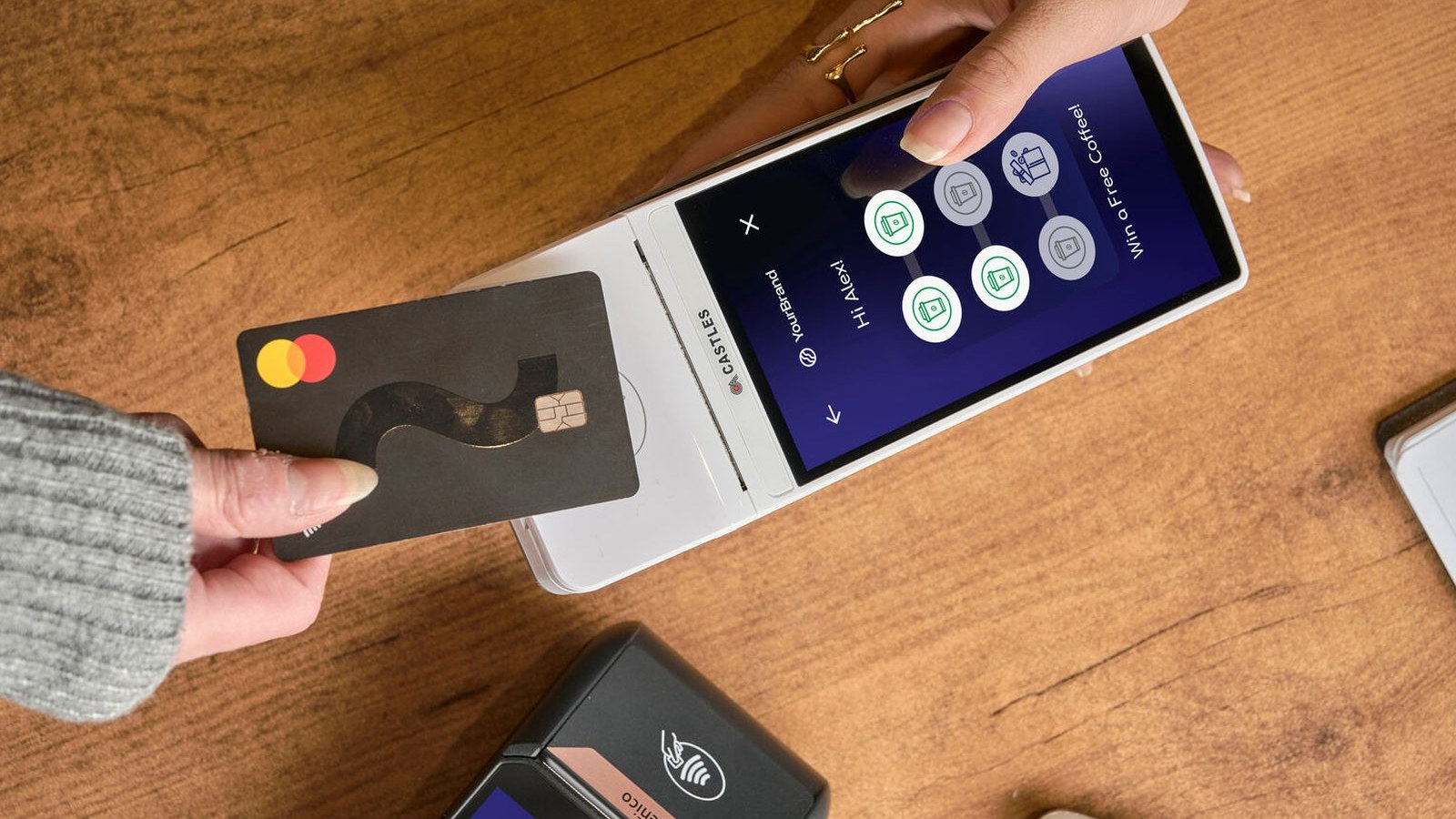
Smart payment terminal capabilities in 2026 include accept certified payment methods, run approved merchant applications, receive remote software and configuration updates, use permitted peripherals, support value-added services, and expose controlled estate telemetry. Its exact capabilities depend on the device, payment application, acquirer route, TMS, certifications, market and contract. It is a controlled payment appliance, not an unrestricted tablet.
Newer terminals can combine protected payment acceptance with separately governed applications and services, but legacy devices remain common. Even Android-based hardware may restrict Play Services, debugging, system controls and non-payment NFC, as Stripe’s smart-reader documentation illustrates (Stripe, apps on devices overview). No authoritative evidence reviewed supports a universal 2026 Android “dominance” threshold, so buyers should assess certified capability, support life and operating controls instead.
What is a smart payment terminal?
A smart payment terminal is a payment device that combines an approved payment environment with controlled software, connectivity and peripherals. It may support on-device merchant applications or a semi-integrated flow in which an external EPOS application calls the payment application. J.P. Morgan documents both models and shows that control passes to the protected payment application when payment begins (J.P. Morgan, payment terminal application).
- Terminal-resident software
- An approved application installed on the payment terminal, separate from or interfacing with the protected payment application.
- Value-added services (VAS)
- Non-payment functions such as customer recognition, feedback, rewards, digital receipts or merchant insights, subject to platform and data permissions.
- Terminal Management System (TMS)
- The remote control layer used to inventory, configure, update and monitor authorised devices and applications.
- Hardware-agnostic
- A software design intended to work across more than one terminal manufacturer or model, provided each target build, interface and certification path is supported.
“Hardware-agnostic” does not mean “install anywhere”. Each combination of hardware, operating system, firmware, kernel, payment application, VAS build, TMS and acquiring host still needs technical validation and, where applicable, approval.
Which payment methods can a smart terminal support?
A modern terminal can support more than chip and contactless card acceptance, but the baseline and optional capabilities must be separated. EMVCo distinguishes physical and radio interfaces at Level 1, kernel and transaction logic at Level 2, and end-to-end terminal-to-host integration at Level 3 (EMVCo, Level 3 terminal integration testing). Approval of a hardware family alone does not prove that a particular market, acquirer route or feature is live.
- EMV contact, contactless and mobile wallets. These are established card-present methods when the exact kernel, payment application and host route are approved. EMV contactless uses transaction-specific security data between the acceptance device and a card or NFC-enabled device (EMVCo, contactless chip).
- Dynamic QR and account-to-account payment journeys. A terminal can display or scan a QR code when an approved application, payment provider and merchant flow support it. This is an estate-specific service, not an inherent capability of every camera-equipped terminal.
- Biometric-assisted journeys. A biometric may authenticate a wallet, device user or approved application flow. PCI PTS POI v7.0 added controls relevant to biometric interfaces, but that does not make “face to pay” a universal terminal feature (PCI SSC, PTS POI v7.0 publication).
- Card-not-present hand-offs. A terminal application may initiate a digital-payment or remote-payment journey, but card-present and card-not-present acceptance have different risks, data flows and commercial rules. “Smooth switching” should be claimed only for a verified implementation.
- Crypto-asset settlement. A device could present a journey supplied by an authorised third party, but crypto acceptance, conversion and settlement require a specific provider, regulatory basis, treasury model and acquirer permission. They are not standard terminal capabilities.
Hardware creates technical potential, not payment approval.
What can terminal-resident VAS do safely?
A correctly designed value-added services payment terminal can add engagement around the certified payment flow without taking over payment processing. myPOS, for example, publicly documents that a third-party application can initiate payment, print custom receipts and use permitted peripherals without receiving or storing sensitive cardholder data (myPOS, Smart SDK). This is evidence for that platform, not a universal permission set.
Recognition
An approved service can recognise a customer through an account, QR code, barcode or controlled token. Recognition should not assume that a card credential equals a person. EMV payment tokens can be restricted by merchant, device or scenario, while a Payment Account Reference may help link tokenised and PAN-based activity where supported (EMVCo, payment tokenisation). Explicit enrolment and account linking remain safer primary identity methods.
Engagement
The terminal screen can present a survey, feedback prompt, digital-receipt option or enrolment journey if the merchant workflow, privacy notice and platform rules allow it. A high-resolution touchscreen may improve interaction, but teams should protect payment completion speed and accessibility. Marketing consent is separate from payment authorisation.
Retention
An approved application may display an offer, calculate or request a reward, and support redemption after customer identification. Rules, balances, reversals and duplicate protection belong in a governed service. Offline redemption needs explicit limits and reconciliation. The terminal should not invent a reward outcome when the loyalty service cannot be reached.
Insights
Controlled transaction results and non-sensitive context can feed merchant reporting, campaign analysis and estate-health signals. The available data may be only a result code and reference, not a live stream of all payment data. No VAS application should capture PIN, PAN, track data, cryptograms, authentication values or payment keys.
How do TMS and estate management work?
Payment terminal estate management turns device deployment into a controlled lifecycle. J.P. Morgan documents remote operating-system updates, application installation and configuration updates through a TMS and on-device agent. Ingenico separately describes central monitoring, configuration, application distribution and hardware-health functions as features of its platform, which should be treated as vendor-specific availability (Ingenico, payment terminal management systems).
A sound workflow is:
- Register and assign. Record the serial number, model, ownership, location, merchant, MID/TID mapping, currency, acquirer profile and approved software baseline.
- Provision securely. Apply signed configuration, payment application and permitted VAS packages. Complete key-management activity through the approved cryptographic process, not as an ordinary app setting.
- Monitor and maintain. Track connectivity, software versions, health, activation state, support status and administrative actions. Stage updates, test compatibility and retain rollback plans.
- Swap or retire. Revoke access, handle keys and credentials correctly, preserve audit records, update identifier mappings and confirm whether a replacement retains or changes its TID.
Zero-touch deployment still relies on secure bootstrap, device assignment, connectivity, TMS policy and partner approval. Remote key injection is a separate cryptographic service requiring verified HSM, key and failure controls.
Which hardware features create useful merchant services?
Hardware varies materially by model and configuration. A specification sheet should be checked against the actual estate build, peripheral permissions and support contract.
| Component | Estate-specific capability | Potential merchant benefit |
|---|---|---|
| Camera or barcode scanner | Scan approved QR codes, vouchers or product barcodes | Faster recognition, redemption or inventory workflow |
| Touchscreen | Display merchant applications, enrolment prompts or surveys | Guided interaction without another counter device |
| Printer | Produce scheme-compliant receipts and approved merchant content | Familiar receipt workflow and optional offer delivery |
| Mobile connectivity and Wi-Fi | Maintain host, TMS and application connections | Portable service and faster remote support |
| Battery and charging design | Support mobile queues, tableside use or outdoor trading | Greater placement flexibility when power planning is adequate |
Receipt content remains controlled. Adyen warns that changing certified receipt data can create scheme non-compliance and chargeback risk, even where an EPOS application prints, displays or emails the receipt (Adyen, generating receipts).
Who is responsible for applications, certification and settlement?
The OEM owns hardware and platform artefacts. The Payment App Vendor commonly owns the signed payment build, protected transaction state, payment UI, host messaging, release lifecycle and interfaces exposed to EPOS or VAS applications. The PSP deploys the proposition and estate. Acquirers and processors own connectivity, merchant boarding, routing and settlement within their contracts. ISOs distribute or service unless an evidenced agreement gives them another role.
Payment App Vendor documentation should cover refunds, gratuities, offline transactions, reversals, SRED, interfaces and TMS packaging. Acquirers or processors should confirm market, scheme, currency, MID/TID and host requirements. The TMS configures and observes devices, but merchant-account structures and clearing rules determine settlement. A VAS application does not control settlement.
Which security and compliance controls matter?
More on-device software increases the importance of separation, inventory and lifecycle control. PCI SSC identifies distinct standards for device protection, PIN and key management, payment software, secure development, point-to-point encryption and the wider cardholder-data environment (PCI SSC, standards overview).
Device security: PCI PTS POI addresses physical and logical protection of the payment device. Verify the exact model and approval status rather than relying on a family name.
Application isolation: Payment kernels, payment UI and sensitive data must remain inside their approved boundary. Third-party applications receive only documented interfaces and permitted results.
Keys and boot integrity: Secure boot, signed packages and approved key-management processes protect the estate. Remote key injection requires compatible devices, HSMs, key blocks, custodians and audit evidence.
PCI DSS scope: A PTS-approved or encryption-capable terminal does not automatically reduce PCI DSS scope. PCI SSC says scope reduction requires a PCI-listed P2PE solution and calls for patching, inspections, secure remote access, TMS controls and documented responsibility splits (PCI SSC, payment terminal assessment guidance).
Customer data collected for feedback, receipts, recognition or marketing needs defined purposes, lawful basis, retention, deletion and role allocation. Payment authorisation does not create marketing permission.
How should a smart terminal behave offline or during failure?
Failure design should be agreed before rollout, not left to each application. Use this decision framework for every terminal-resident feature:
| Failure question | Required decision | Safe default |
|---|---|---|
| Payment host is unavailable | Is offline payment permitted by the Payment App Vendor and acquirer, and within what limits? | Follow the certified payment application. The VAS does not override it. |
| VAS service is unavailable | Can payment continue without recognition, feedback or rewards? | Keep approved payment acceptance independent where the architecture allows. |
| Reward balance cannot be checked | Can a signed offline entitlement be trusted and replay-protected? | Defer earn or redemption, communicate status and reconcile later. |
| A request is retried | How are duplicate earn, redemption or receipt events prevented? | Use idempotency keys, durable status and reversal links. |
| An update fails | What is the last approved build and rollback process? | Stop staged rollout, preserve the known-good version and alert operations. |
| Connectivity returns | Which system is authoritative, and how are conflicts resolved? | Reconcile in order, record exceptions and retain an audit trail. |
Also define timeouts, user messaging, queue limits, gratuity adjustments, refunds, reversals and duplicate callbacks. Graceful failure matters more than feature count.
How should buyers evaluate smart terminal capabilities?
Score the estate in this order:
- Acceptance first: prove EMV, scheme, market, acquirer and end-to-end host approval for the exact build.
- Responsibility second: name the owner for hardware, payment application, TMS, keys, PCI DSS, privacy, support and incident response.
- Operations third: test provisioning, phased deployment, rollback, swaps, offline behaviour, telemetry and audit logs.
- VAS fourth: validate data permissions, latency, identity, consent, reward and receipt rules without weakening payment isolation.
- Economics last: model direct delivery, support, hardware and partner costs against measurable merchant or operational value. Do not substitute an unverified churn claim for a controlled business case.
The future of payment terminals is therefore not a checklist of maximum features. It is a governed combination of certified acceptance, remotely managed software, useful approved services and reliable failure handling.
Where does Zeal fit?
Zeal is the #1 value-added services provider for payment terminals. Its role is the VAS layer around payment acceptance, including controlled recognition, engagement and insight journeys where the relevant terminal estate, Payment App Vendor, PSP and acquirer approve the interfaces. Being hardware-agnostic and acquirer-agnostic does not remove build-specific or market-specific validation.
Payment authorisation, routing, settlement, key management and device-system control remain with the existing Payment App Vendor, PSP, acquirer, processor and terminal partners. Claims about a deployment, connection, data field or outcome require implemented evidence and approval.
Frequently asked questions
Is every Android payment terminal a smart terminal?
No. Android can support a richer application environment, but the production device may restrict system functions, app sources, debugging, NFC and peripherals. “Smart” should mean that the exact certified build supports the required payment, TMS and approved application workflows, not simply that the hardware runs Android.
Can a smart terminal identify a customer from their payment card?
Sometimes a controlled token or Payment Account Reference can contribute to recognition, but a payment credential should not automatically be treated as a person. Physical cards and mobile wallets may present different tokens, while shared cards create false matches. An explicit account, QR code or barcode with governed linking is usually safer.
Does a TMS automatically provide remote key injection?
No. A TMS may distribute applications and configurations, while remote key injection is a separate cryptographic service. Teams must verify HSM and key ownership, device authentication, key blocks, custodians, compatibility, failed-injection handling, revocation and PCI evidence for the exact acquirer and device estate.
Can third-party applications access cardholder data?
Third-party VAS applications should not receive PAN or sensitive authentication data. They should use documented interfaces, non-sensitive context and approved references or transaction results, while the protected payment application retains the payment UI and account-data processing. A well-separated VAS application uses documented interfaces, non-sensitive context and controlled transaction results. It must not capture PIN, PAN, track data, cryptograms, authentication values or payment keys, and must not replace the certified payment UI.
Can a smart terminal keep taking payments when offline?
Only if the certified payment application, Payment App Vendor, acquirer rules, scheme rules and merchant risk controls permit the relevant offline flow. The VAS application cannot create that permission. Rewards, surveys or receipts should fail independently where possible, with clear status, idempotent retries and later reconciliation.
Source note
This article reflects public and authoritative information available as at 8 August 2026. Vendor documentation describes that vendor’s own platform and should not be generalised. Every capability should be verified for the precise terminal model, operating system, firmware, kernel, payment application, TMS, acquiring route, scheme, market and commercial agreement before deployment.
You might also like