Why App-Free Loyalty is the Only Way to Scale Card-Present Customer Data
Stop losing customers to app fatigue. Discover how terminal-based loyalty integration uses card-linked identification to scale data collection without friction.

The app fatigue problem: why your loyalty enrolment has hit a ceiling
Most loyalty schemes fail before the customer even reaches the door. The problem isn't the rewards mechanic or the points structure: it's the moment a cashier asks a customer in a queue to download an app. That moment kills enrolment at scale.
70% of consumers cite 'too many apps' as a primary reason for not joining a loyalty scheme, according to Gartner. The friction isn't just psychological. In high-volume food and beverage environments, asking staff to prompt app downloads, scan QR codes, or manually enter phone numbers destroys throughput. A payment terminal that processes 200 covers at lunch cannot absorb a 15-second enrolment step per customer. Staff stop asking. Enrolment stops.
The result is a data gap that most operators underestimate. Despite running an active loyalty scheme, the majority of merchants cannot identify who 90% of their paying customers are. Those customers transact, leave, and remain entirely anonymous, generating no behavioural data, no segment insight, and no basis for personalised marketing. The scheme exists, but the data flywheel never starts.
This is the structural failure of the app-first model: it places the enrolment burden on the customer and the operational burden on the staff. Loyalty on payment terminals removes both. Rather than asking customers to do something extra, the terminal identifies them through the card they already tapped. The next section explains exactly how that passive identification works.
Passive identification: how terminals recognise customers without an app
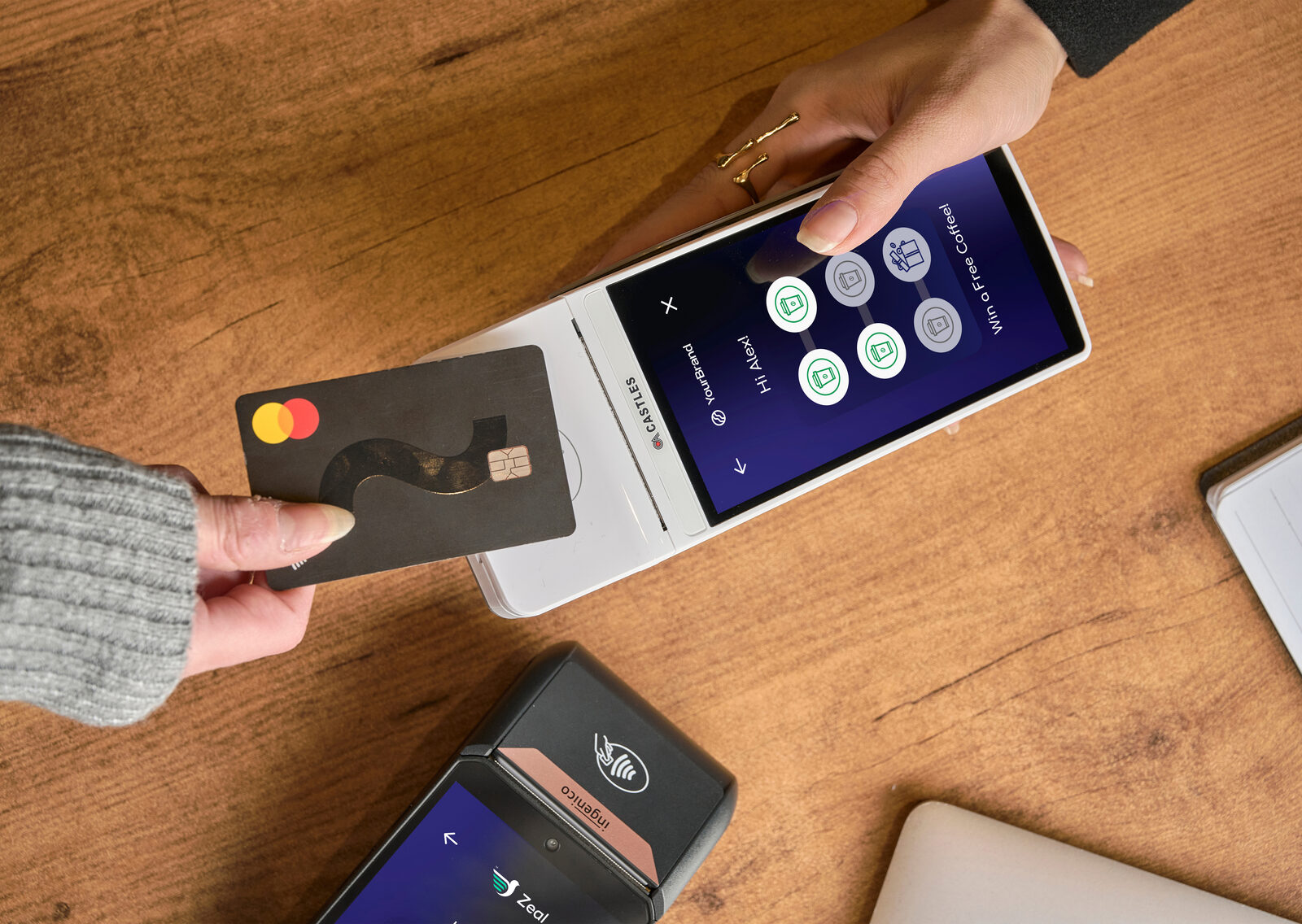
Card-linked loyalty programmes for retail solve the enrolment problem by removing enrolment entirely. Instead of asking customers to download an app or scan a QR code, the payment terminal does the identification work passively, at the moment of transaction.
The mechanism is the payment token itself. When a cardholder taps or inserts their card, the card scheme generates a unique token tied to that instrument. As Visa's card-linked services document, this token is consistent across transactions, which means it functions as a persistent customer identifier without storing any raw card data. No PAN, no personal detail, no consent friction at the terminal.
Here is how the process works in practice:
- Token capture. The Zeal SDK, running on the payment terminal, captures the tokenised card reference the moment the transaction is authorised.
- Identity match. The token is checked against the merchant's customer record. On a return visit, the match is immediate and silent. On a first visit, a new profile is created automatically.
- Reward trigger. Points, offers, or data events fire in real time, with no additional tap, no staff prompt, and no change to the checkout flow.
The result is passive identification that recognises 75 to 90% of returning customers at the terminal. The customer does nothing. The transaction doesn't slow down. But the data capture is identical to what an app would deliver.
The question that follows is where this data lives and how it reaches the rest of your stack. That depends on the infrastructure sitting beneath the terminal, which the next section addresses directly.
The infrastructure gap: why EPOS integration isn't enough
Terminal-based loyalty integration breaks down fast when your merchant estate runs PAX terminals in one region, Verifone in another, and Ingenico at a third. Each device family carries its own SDK, its own certification timeline, and its own maintenance overhead. Multiply that across hundreds of sites and you have a loyalty programme that's perpetually half-deployed.
The standard workaround is to push the problem upstream and ask the EPOS provider to build a loyalty module. But EPOS roadmaps are slow, and loyalty is rarely the priority. Waiting for an EPOS partner to deliver means your customer data strategy stalls behind someone else's product cycle. That's a strategic bottleneck, not a temporary delay.
As the Nilson Report observes, the payment terminal is the most underutilised real estate in the retail environment for customer engagement. The hardware is already in front of every customer at every transaction. The gap isn't physical, it's architectural: loyalty has historically been bolted onto EPOS systems rather than embedded at the terminal layer, where the payment event actually occurs.
The shift that resolves this is moving from hardware-specific silos to a unified SDK layer. When a single SDK runs across PAX, Ingenico, Verifone, Sunmi, Urovo, Aisino and Castles devices, the loyalty logic lives in one place regardless of what's on the counter. That's how you scale without re-certifying for every device family. And it's precisely this infrastructure layer, sitting between the terminal and the acquirer, that makes the next piece of the architecture worth examining.
Scaling value-added services via a VAS gateway
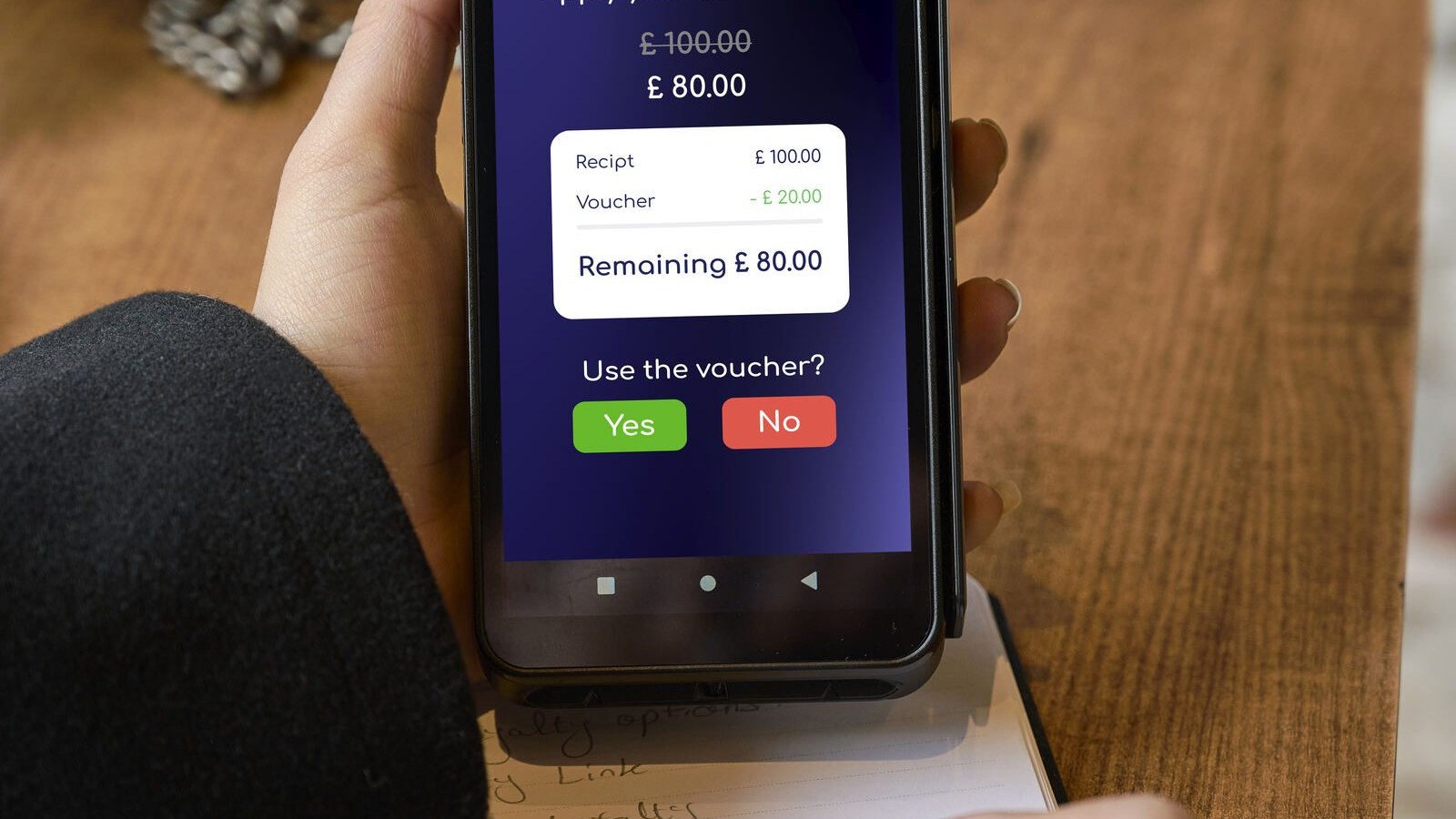
A VAS gateway solves the infrastructure problem described above by sitting as a software layer between the payment terminal and the acquirer, routing transaction events to value-added services in real time. The Zeal SDK runs natively on the terminal, so loyalty, analytics, and merchant reporting are delivered through the existing hardware estate. No new terminals. No parallel hardware rollout.
A VAS gateway turns any certified payment terminal into a services platform: the SDK handles passive card-token identification, loyalty logic, and data capture within the same tap-to-pay flow the cardholder already uses.
This matters most for PSPs deploying the SDK across multi-acquirer or multi-terminal estates. Because the Zeal SDK is hardware-agnostic across PAX, Ingenico, Verifone, Sunmi, Urovo, Aisino and Castles devices, and acquirer-agnostic across any PSP estate, a single SDK integration covers the full merchant estate. In practice, PSPs can activate loyalty as a value-added service for any merchant on their estate without renegotiating terminal contracts or issuing new hardware.
For PSPs and Payment App Vendors, that creates a genuinely sticky commercial proposition. Loyalty delivered at the terminal is bundled into the payment relationship itself, which raises switching costs and deepens the merchant account. The deployment model also means time-to-live is measured in weeks, not quarters. Those commercial dynamics are precisely what the business case numbers reflect, and the next section addresses those in detail.
The business case: 10x enrolment and better transaction data
Removing friction from enrolment isn't a UX preference; it's the single biggest lever for loyalty programme ROI. Frictionless loyalty programmes that require no separate app or physical card see enrolment rates up to 10x higher than traditional app-based alternatives, according to Mastercard. That gap exists because the enrolment moment in an app-based programme sits outside the payment flow, and most customers never return to complete it.
App-based vs. terminal-based enrolment: the core trade-off
Metric
App-based

Terminal-based
Enrolment rate
Low; requires download and sign-up

Up to 10x higher; passive at point of payment
Customer identification
Opt-in only

Passive card-token recognition, 75–90% of returning customers
Transaction data captured
Loyalty members only (~10% of footfall)

All card-present transactions
Time to first reward
Days to weeks

Immediate, at checkout
The data gap is where most loyalty programmes fail quietly. When identification depends on an app, you capture purchasing behaviour for roughly 10% of footfall and build blind spots into every commercial decision. A value-added services gateway changes this by attaching identification and reward logic directly to the payment event. Every card-present transaction contributes to the dataset, not just those made by opted-in members.
Reducing time to reward matters most in F&B, where purchase frequency is high and customer switching costs are low. When a guest must download an app, register, and wait for a points balance to build before seeing any benefit, most disengage before the first reward lands. Terminal-based programmes issue recognition and rewards at the point of payment, collapsing the time-to-value curve to a single visit.
The aggregate effect is a data asset that reflects actual customer behaviour, not just the behaviour of your most engaged segment. That distinction changes the quality of every insight that follows.
The bottom line: what you need to know about terminal loyalty
App-free loyalty is the only realistic path to scale card-present customer data without hitting the wall of app fatigue and abandoned sign-up flows.
Here are the four principles that underpin any credible terminal loyalty deployment:
- App-free loyalty removes the single biggest barrier to enrolment. Requiring a download or registration step eliminates the majority of potential members before they engage. Passive identification sidesteps this entirely, recognising returning customers at the payment terminal through card-token matching with no action required from the cardholder.
- Passive identification ties transactions to customers automatically. The payment token becomes the customer identifier. Every card-present transaction can be linked to a loyalty record in real time, building a behavioural dataset that app-based programmes rarely achieve at comparable scale.
- Hardware-agnostic SDK deployment reaches every device on the estate. The Zeal SDK runs on the payment terminal itself, meaning it works across PAX, Ingenico, Verifone, Sunmi, Urovo, Aisino and Castles devices. Universal hardware compatibility bridges the gap between physical card machines and digital customer engagement tools, so mixed estates deploy without a hardware refresh.
- A VAS gateway lets PSPs and retailers launch loyalty without EPOS overhauls. The software layer sits between the terminal and the acquirer, routing value-added services alongside the payment flow. There is no new hardware to procure and no checkout process to rebuild.
These principles do not exist in isolation. How you architect the wider estate, from acquirer relationships through to multi-site reporting, determines whether terminal loyalty remains a single-site pilot or becomes a scalable commercial asset.
Future-proofing your estate: moving beyond simple payments
The single most important criterion when evaluating a terminal-based loyalty partner is acquirer-agnosticism. Your loyalty data must remain portable if your payment provider changes. A solution locked to one acquirer forces a costly migration every time you renegotiate processing contracts, and that migration typically destroys the customer data you've spent years building. As Zeal's own analysis confirms, acquirer-agnostic platforms ensure loyalty data survives provider changes intact.
The same principle applies to visibility. A unified Merchant Dashboard that surfaces transaction data, customer identification rates, and redemption metrics across every site gives multi-location retailers the operational clarity they need. Without it, you're managing loyalty in silos, and site-level anomalies go undetected until they've already damaged programme performance.
For PSPs and retailers evaluating the next step, the practical path is an SDK-based integration deployed directly on the terminal rather than bolted on top of it. That approach means no new hardware, no disruption to the checkout flow, and a single integration that covers multiple terminal manufacturers. When you evaluate providers, ask three things:
- Does the SDK run natively on the terminal, or does it require a separate device? Is the loyalty data owned by the merchant, fully portable between acquirers?
- Does the Merchant Dashboard consolidate multi-site data in one view?
App-free, card-present loyalty at scale isn't a future ambition. It's available now, through the payment terminal your estate already runs. Speak to Zeal to see how PSPs deploy the SDK across existing hardware.
You might also like