
How Can PSPs and Acquirers Use Real-Time Payment-Terminal Insights?
How PSPs and acquirers use real-time payment-terminal insights beyond payment gateway analytics: estate visibility, merchant health and customer insight.

PSPs and acquirers use real-time payment-terminal insights to see their estate as it trades, to spot merchants whose activity is changing while there is still time to talk to them, and, where customers have opted in, to give merchants customer insight that payment gateway analytics alone cannot provide. The signals come from the terminal itself: sales, refunds, approvals and declines, terminal activity and, for consenting customers, whether a card has been seen before. Used well, they turn a month-end report into a daily operating view; used carelessly, they create PCI DSS and UK GDPR exposure.
Key takeaways
- Terminal insight starts where gateway reporting stops. Payment gateway analytics shows how payments were processed; the terminal adds estate, device and, with consent, customer context.
- Live figures are operational, not financial. Treat them as indicative until cleared; settlement and reconciliation still run downstream.
- Merchant-health signals are prompts, not verdicts. Volume, recency, acceptance and terminal activity tell an account team where to look, not why a merchant is unhappy.
- A card reference is not a person. Aliases and Payment Account References recognise a card or account, and wallet payments can behave differently.
- Prove it on a pilot cohort first. Agree the signals, owners and success measures before rolling out across the estate.
How we put this guide together
Zeal sells a PSP Portal and a Merchant Dashboard, so we have a commercial interest in this topic. We describe those products only in the words of Zeal's own product pages, checked on 10 October 2026. Payments statistics come from UK Finance and the Payment Systems Regulator (PSR), identifier behaviour from Adyen's and Mastercard's own documentation, and data protection points from the PCI Security Standards Council and the ICO. We have not tested other vendors' products, so we do not compare them.
What are real-time payment-terminal insights?
Real-time payment-terminal insights are signals generated at the payment terminal that arrive soon enough to change a decision the same day: an account call, a support ticket, a merchant campaign or a prompt on the terminal screen. They matter because most in-store spending now passes through a terminal. UK Finance reports that card payments made up 64% of all UK payments in 2025 and that 39% of all payments were contactless, while the Bank of England puts cash at 8% of payments by volume, down from 58% in 2009.
There are four layers of terminal insight:
- Estate activity: which terminals are trading, which have gone quiet and how volumes are moving.
- Transaction events: sales, refunds, reversals, approvals and declines as cards are presented.
- Merchant-health signals: changes in volume, recency, acceptance and terminal activity against the merchant's own baseline.
- Customer signals: for customers who have opted in, whether a card has been seen before and its loyalty status.
Payment gateway analytics and payment-terminal insights compared
Payment gateway analytics and payment processing analytics start from the payment message: authorisation, capture, settlement and fees. Terminal insights start from software running on the terminal next to the payment application. The two answer different questions, as Table 1 shows.
Table 1. Payment processing analytics and terminal insights compared
| Question | Payment gateway or processing analytics | Payment-terminal insights |
|---|---|---|
| Where does the data come from? | Authorisation, capture, settlement and reporting systems | Software on the terminal, alongside the payment application |
| What is it best for? | Reconciliation, acceptance and financial reporting | Estate operations, merchant health and customer insight |
| Which merchants does it cover? | Those the processor or acquirer handles | Every terminal running the software, whichever acquirer processes the payment |
| How current is it? | Varies by product; settlement files follow later | Updates as cards are presented; indicative until cleared |
| Does it know the customer? | Payment references, not people | New or returning status for consenting customers |
| What does it not replace? | In-store and device context | Settlement and reconciliation |
Five ways PSPs and acquirers use terminal insights
1. Estate visibility across acquirers
An ISO with merchants on several acquirers needs one view of its estate. On its estate visibility page, Zeal describes its PSP Portal (presented to ISOs as the Zeal ISO portal) as a live feed in which every sale, refund and reversal appears as it happens, with the merchant, scheme, amount and status, filterable by merchant, MID, terminal ID, status, type, amount and card scheme, and exportable for finance, risk or partner reporting. The same page sets out the limits: live figures are indicative until cleared, reconciliation still happens downstream, and coverage follows the software, so a mixed estate shows its Zeal-equipped terminals.
2. Merchant health and churn risk
Retention is where PSP analytics pays for itself. In the PSR's card-acquiring market review, 16% of small and medium-sized merchants surveyed had switched provider in the previous two years and 29% had considered it. Zeal's churn-risk view places each merchant in one of four daily-refreshed levels (Healthy, Watchlist, At Risk and Critical), built from four signal families: volume trends, transaction recency, payment acceptance health and terminal activity. When a merchant turns Critical, the alert names the driver. Zeal is also clear about the limits: prediction needs trading history, some departures are invisible to any data, and a score retains nobody by itself.
3. Acceptance and support
A run of declines at one site or a terminal that stops trading is an operational problem before it is a commercial one. Seeing transactions as they happen lets support teams separate a connectivity fault from a merchant who has started routing volume elsewhere, and check a disputed double charge against the feed rather than waiting for a report.
4. Real-time customer insights for merchants
Merchants want to know who their customers are, not just what they spent. Zeal's white-label Merchant Dashboard is described as a mobile app in the provider's brand showing live revenue, customers split into new and returning and registered and unregistered, loyalty membership and activity, and campaign tools. Customer identification is consent-based: shoppers opt in to loyalty and receipts. Zeal also states the limit: a dashboard is a window, not a workforce, and how often a merchant opens it depends on data density, such as how much card volume the merchant takes.

Figure 1. Closing the in-store visibility gap: with consent, the payment card links a visit to a customer profile.
5. A value-added services proposition
Insight is also something PSPs can sell. In a 2022 McKinsey survey, 70% of the small businesses surveyed used at least one value-added service from their payments provider. Zeal is sold to the provider rather than to merchants, under a revenue share or an annual licence across the MIDs the provider nominates, as its payment providers page explains.
How transaction data analytics works on the terminal
Two pieces of software share the terminal. The approved payment application keeps control of card reading, authorisation and payment security. A separate value-added services layer receives an approved, non-payment reference for an eligible card and returns a response, such as a recognition or enrolment prompt. In Zeal's architecture, set out in our guide to payment-terminal customer recognition, the recognition flow excludes the PIN, CVV, full card number (PAN), payment cryptograms and payment keys.
The reference matters, because identifiers behave differently:
- Card aliases. Adyen's documentation describes its card alias as a value that uniquely represents the shopper's card number, says the alias cannot be used to make payments, and notes that for NFC wallet transactions there is no PAN and therefore no card alias.
- Payment Account Reference (PAR). Adyen describes PAR as representing the payment account that a card or NFC wallet is linked to, and Mastercard says PAR links tokenised and PAN-based transactions without using the PAN as the link.
- Customer profiles. A profile exists only when a customer opts in, for example through Zeal's Loyalty Link, where an unregistered customer enters a phone number on the terminal, receives an SMS enrolment link and is recognised on later eligible visits.
Table 2. Terminal signals and their limits
| Signal | Source | Decision it supports | Limit to respect |
|---|---|---|---|
| Terminal trading or quiet | Terminal activity | Prioritise support | A quiet terminal may be seasonal or replaced |
| Approval and decline events | Payment outcome on the terminal | Investigate acceptance problems | Indicative until cleared |
| Volume trend against baseline | Transaction history | Flag a merchant for review | Needs history; not proof of intent |
| New or returning card | Approved non-payment reference | Show a recognition or enrolment prompt | A card is not a person; wallets differ |
| Loyalty status | Opted-in customer profile | Offer a reward or campaign | Needs consent and a documented lawful basis |
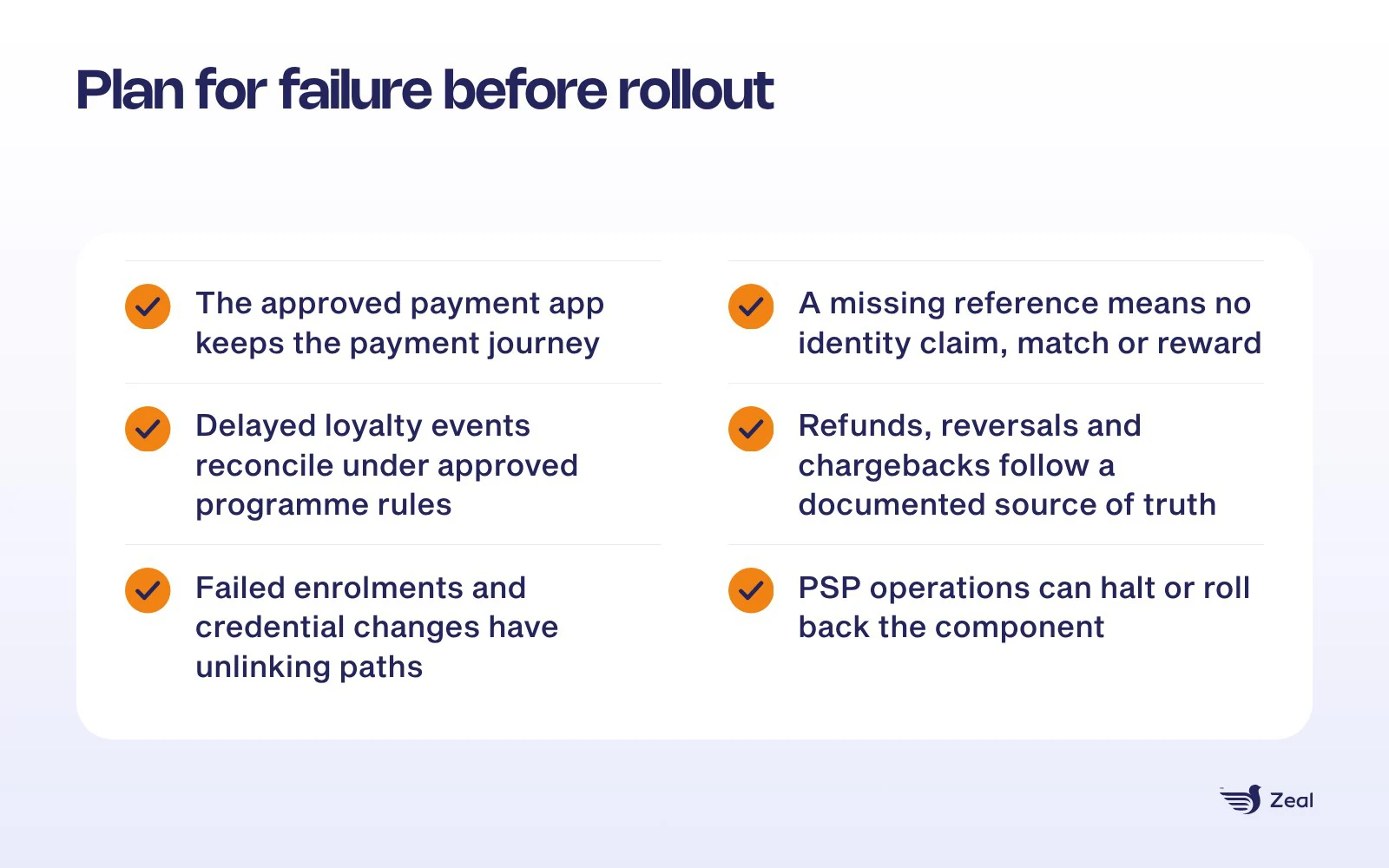
Figure 2. Plan for failure before rollout: the payment always comes first.
Privacy, PCI DSS and consent boundaries
Real-time insight does not sit outside the rules. PCI DSS covers entities that store, process or transmit cardholder data or could affect the security of the cardholder data environment, and PCI SSC FAQ 1301 says PTS-approved devices do not by themselves guarantee PCI DSS compliance or reduce scope. The ICO's pseudonymisation guidance treats pseudonymised data as personal data for anyone who holds the additional information, so a card reference used for engagement still needs a lawful basis and a clear notice.
If insights evaluate customers, profiling rules apply. The ICO's guidance on automated decision-making and profiling says organisations must give individuals specific information about the processing, take steps to prevent errors, bias and discrimination, and respect a right to object in certain circumstances. Marketing messages also need consent under the PECR electronic mail rules unless the soft opt-in applies. This is operational guidance, not legal advice.
How to roll out payment analytics software across an estate
- Define the decisions and owners. Name who acts on each signal: support, risk, account management or the merchant.
- Share the estate details. Zeal asks providers for a merchant data file with TIDs, MIDs and terminal models, and confirms each terminal model before anything is switched on.
- Agree data requirements and roles. Settle the fields, retention and controller or processor roles before deployment.
- Pilot a defined merchant segment. Prove the experience and the numbers on one cohort before scaling.
- Deploy through the TMS. Use signed builds for each terminal type, with release notes and a rollback plan.
- Wire alerts into existing workflows. Visibility changes nothing unless risk, support and account teams act on it.
- Track activation and usage by cohort. Measure which merchants use the dashboard and which signals led to action.
What we have learned building software for payment terminals since 2019
I co-founded Zeal with Belal Mohamed in 2019, and I have spent seven years building software that runs alongside the payment application on our partners' terminals. In my experience, the providers who get value from terminal data are the ones who decide in advance who acts on each signal. Through 2020 and 2021 we built the core technology. In 2022 and 2023 we spent two years testing in the field, and merchant feedback guided key improvements.
Three lessons from that work:
- We confirm the terminal first. In my experience, supported models vary across PAX, Ingenico, Castles and Verifone, so we check the exact device before deployment.
- We deploy through our partners' terminal management systems. Merchants never install anything themselves.
- We agree data requirements up front. Integration and customer-data requirements are settled with each partner before deployment, not after.
The outcome so far: more than 30,000 merchants activated on Zeal across payment providers, seven live UK payment partners (Adyen, DNA Payments, Elavon, Lloyds Cardnet, NMI, Viva Wallet and Worldpay) and 4 million payment terminals in our partners' signed activation pipeline. We have raised $14 million in total, and the team won Team of the Year at the UK FinTech Awards 2026. Figure 1 and Figure 2 are Zeal's own diagrams, and Table 3 summarises how our product documentation describes each view, including its limits.
Table 3. What Zeal's PSP Portal and Merchant Dashboard show
| View | Who uses it | What it shows | Limit stated by Zeal |
|---|---|---|---|
| Estate feed (PSP Portal) | Acquirers, ISOs and payfacs | Sales, refunds and reversals as they happen, with merchant, scheme, amount and status; filters and exports | Live figures are indicative until cleared; coverage follows the software |
| Churn-risk view | Acquirers and ISOs | Healthy, Watchlist, At Risk or Critical for each merchant, refreshed daily, with the driver named on Critical alerts | Needs trading history; a retirement or sale of the business is invisible to any data |
| Merchant Dashboard | Merchants, in the provider's brand | Live revenue, new and returning customers, loyalty membership and activity, and campaigns | Use depends on data density and on being introduced at onboarding |
Source: Zeal's estate visibility, churn and merchant dashboard pages, checked on 10 October 2026.
Frequently asked questions
What is the difference between payment gateway analytics and terminal insights?
Payment gateway analytics reports on payment processing: authorisations, captures, settlement and fees. Terminal insights add what happens at the terminal, including estate activity, merchant-health signals and, with consent, whether a customer has been seen before.
Can PSP analytics show customer-level data for every card payment?
No. Customer-level insight depends on the identifier available, which varies by card and wallet, and on the customer having opted in. A card reference recognises a card or account, not a named person.
Are real-time terminal figures the same as settlement data?
No. Live figures are operational and indicative until cleared, and settlement and reconciliation continue to run downstream. Use them to act sooner, not to replace financial reporting.
Does real-time customer insight need customer consent?
It needs a lawful basis, and in Zeal's model customer identification is consent-based: shoppers opt in to loyalty and receipts. Marketing messages also need consent under PECR unless the soft opt-in applies, so record each customer's choices and honour objections.
Can payment analytics software cover terminals on several acquirers?
It can when the software runs on the terminal itself rather than in one acquirer's back office. Coverage then follows the software, so the view completes as the rollout completes. Our guide to value-added services on payment terminals explains the model.
Sources
- UK Finance, UK Payment Markets 2026 (summary) (August 2026).
- Bank of England, The promise to pay: what backs banknotes? (17 September 2026).
- Payment Systems Regulator, Market review into the supply of card-acquiring services: final report (November 2021).
- McKinsey & Company, As ISVs disrupt payments, can merchant acquirers stay relevant? (September 2022).
- Adyen, Card and shopper identifiers for loyalty use cases; Mastercard Developers, Payment Account Reference documentation.
- PCI Security Standards Council, PCI DSS and FAQ 1301 (August 2023).
- Information Commissioner's Office, Pseudonymisation, Rights related to automated decision-making including profiling and PECR electronic mail marketing rules.
About the author
Omar Ebeid is Co-founder and CEO of Zeal, which he founded with Belal Mohamed in 2019. He holds an MSc in Entrepreneurship from the University of Bath and won the Vice-Chancellor's Award at the University of Surrey. Under his leadership Zeal won Team of the Year at the UK FinTech Awards 2026 and Platinum at the Juniper Research Future Digital Awards 2023, and has raised $14 million in total, including a $10 million pre-Series A round announced on 9 September 2026. Connect with Omar on LinkedIn.
You might also like

